Introduction
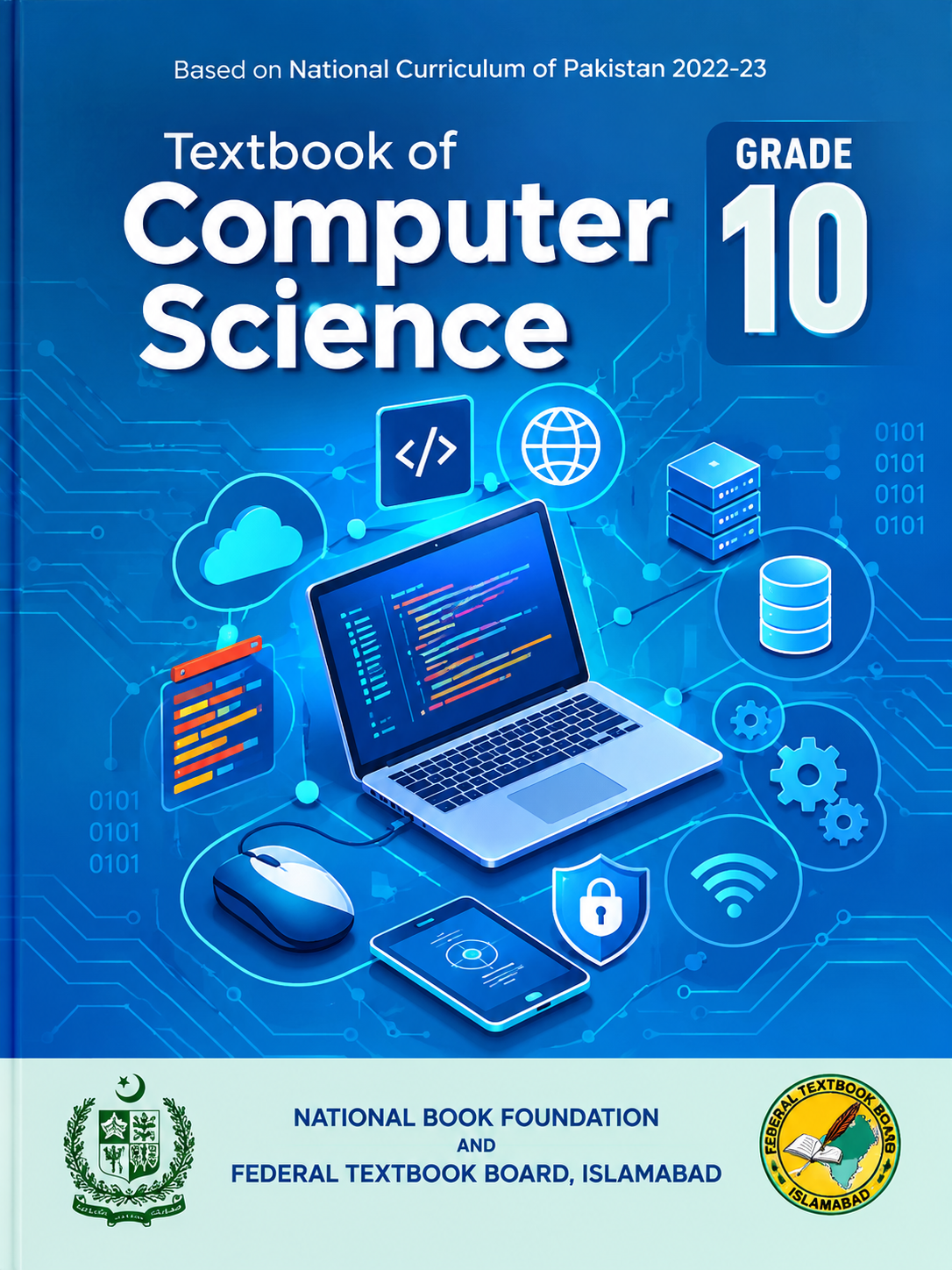
Students of Class 10th FBISE Complete, solved MCQs, short, and extended questions for Class 10 Computer Science are now available on HSA Notes, starting with a full breakdown of Unit 1, aimed at helping FBISE Matric students score 90 plus marks. This page covers all eight chapters of the NBF Computer Science syllabus, along with a preview of the solved key questions available for Unit 1.
All Units
| No. | Chapter | Status |
|---|---|---|
| 1 | Computer Systems | Coming Soon |
| 2 | Computational Thinking and Algorithms | Coming Soon |
| 3 | Programming Fundamentals | Coming Soon |
| 4 | Data Analysis | Coming Soon |
| 5 | Applications of Computer Science | Coming Soon |
| 6 | Impacts of Computing | Coming Soon |
| 7 | Digital Literacy | Coming Soon |
| 8 | Entrepreneurship in Digital Age | Coming Soon |
Official Youtube Channel: www.youtube.com/@FBISEOfficial
What Each Chapter Covers
Chapter 1, Computer Systems Covers numbering systems, conversion between decimal, binary, octal, and hexadecimal bases, ASCII and Unicode coding schemes, Operating System functions, and application software hosting.
Chapter 2, Computational Thinking and Algorithms Covers counting problems and principles such as permutations, combinations, and the pigeonhole principle, algorithm properties, logical reasoning through Boolean logic, sorting and searching algorithms, modular design, and dry running code.
Chapter 3, Programming Fundamentals Covers website development basics, interactive HTML and CSS forms and tables, CSS animations, JavaScript complex control structures, list algorithms, and advanced unit testing and debugging techniques.
Chapter 4, Data Analysis Covers data science, AI, and Machine Learning models including supervised, unsupervised, and reinforcement learning, along with data visualization charts, their benefits, and the stages of the Data Science Life Cycle.
Chapter 5, Applications of Computer Science Covers Internet of Things sensors, blockchain supplies, cloud storage utility, voice recognition platforms, natural language processing applications, robotics, and AI design ethics.
Chapter 6, Impacts of Computing Covers tech addiction issues, privacy cookies and spam threats, public versus private cloud security policies, cybersecurity laws, cyberbullying prevention strategies, and the digital divide’s socioeconomic gaps.
Chapter 7, Digital Literacy Covers digital search skills, information extraction, graphic representations of ideas, designing professional posters or billboards, and leveraging social media channels for communication.
Chapter 8, Entrepreneurship in Digital Age Covers qualitative versus quantitative market research methodologies, survey questionnaire design, product market validation strategies, customer persona profiling, and pitch deck creation.
Overview of Class 10 Computer Science Notes, FBISE
Welcome to a complete resource for Class 10 Computer Science preparation under the Federal Board of Intermediate and Secondary Education.
With the transition toward Student Learning Outcome based examinations, relying on traditional rote learning is no longer sufficient.
These notes are compiled specifically to align with the National Book Foundation, NBF, curriculum, guiding students through both practical concepts and theoretical frameworks smoothly.
The Class 10 Computer Science syllabus covers a diverse range of modern and practical topics that develop both technical knowledge and real-world digital skills. It begins with the fundamental concepts of Number Systems, Algorithms, and Flowcharts, building a strong foundation in computational thinking and problem-solving. Students then move into Programming, where they explore technologies such as HTML, CSS, and JavaScript and learn how programming concepts are applied to create interactive digital solutions.
The syllabus further introduces students to emerging and data-driven fields, including Data Science, Artificial Intelligence, Internet of Things (IoT), and Blockchain. These chapters help students understand how modern technologies collect, process, analyze, and use information to solve real-world problems.
The final part focuses on Cybersecurity and Data Protection, Digital Literacy and Society, and Entrepreneurship, connecting computing with personal security, responsible technology use, society, and future career opportunities. Overall, the Class 10 Computer Science course combines programming and technical concepts with emerging technologies, digital responsibility, and entrepreneurial skills, making it important for students to develop both theoretical understanding and practical knowledge.
HSA Notes Features
- All MCQs from Exercise 1.1 fully solved.
- Short and extended response questions answered in full.
- Detailed coverage of 2’s complement, number systems, and Operating System functions.
- Fully updated for the new NBF syllabus 2025 to 2026.
Trusted Across Leading Schools
These notes are used by students at FBISE and its affiliated schools, along with top institutions including Beaconhouse, Roots, Lahore Grammar School, Aitchison, Froebel’s, Army Public School, St Patrick’s, The City School, Karachi Grammar School, and Fazaia.
Solved Key Questions, Unit 1 Preview
- What is the binary of negative 43 in 8 bit 2’s complement? Answer B, 11010101.
- What is the binary equivalent of the hex value 3FA7? Answer A, 0011111110100111.
- What is the ASCII code for the letter Z? Answer A, 01011010.
- What is the range of an 8 bit signed number? Answer B, negative 128 to 127.
- How many distinct values can a 10 bit number represent? Answer B, 1024.
View the full PDF for complete diagrams and tables covering every question in the unit.
Why This Resource Helps
Computer Science at the Class 10 level now covers everything from binary number systems to entrepreneurship and pitch deck creation, which means students need a resource that treats technical topics like 2’s complement and Boolean logic with the same care as newer, more applied topics like AI ethics and digital literacy.
Having Unit 1 fully solved, with every MCQ, short question, and extended question worked through in detail, gives students a reliable model for how to approach the remaining seven chapters as they are added.
Join Online Classes
Join online classes for full guidance and practice across every chapter of the Class 10 Computer Science syllabus.
Contact: hsanotes48@gmail.com
Frequently Asked Questions
How many chapters are in the Class 10 Computer Science NBF syllabus? There are eight chapters in total, ranging from Computer Systems through to Entrepreneurship in Digital Age.
Which chapter is fully solved right now? Chapter 1, Computer Systems, including Exercise 1.1 MCQs and short and extended response questions, is currently available in full.
What topics does Chapter 1 cover? Chapter 1 covers numbering systems, conversions between decimal, binary, octal, and hexadecimal, ASCII and Unicode coding schemes, Operating System functions, and application software hosting.
Are these notes based on the current FBISE syllabus? Yes, these notes are fully updated for the new NBF syllabus for the 2025 to 2026 session.
Conclusion
With all eight chapters of the Class 10 Computer Science NBF syllabus mapped out, and Chapter 1 already fully solved with MCQs and short and extended questions, students have a clear starting point for their FBISE Matric preparation. Remaining chapters are being added progressively, so check back regularly as more units become available.
Best of luck for your Class 10 Computer Science exam!