Introduction
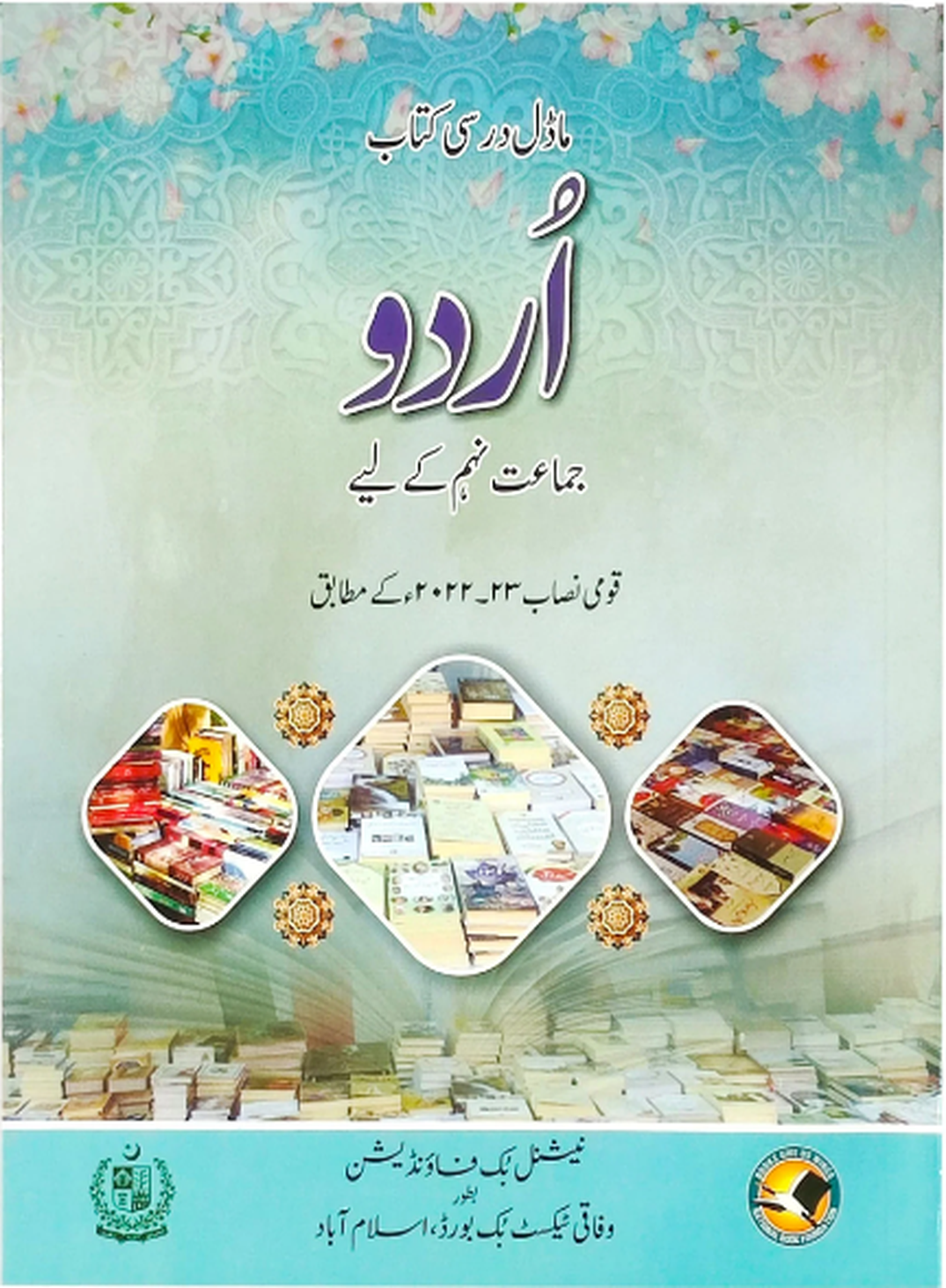
Dear Class 9 students, HSA Notes has put together a set of sample papers for Urdu, FBISE, based on the New Book (NBF) syllabus, ahead of the annual examination, session 2026–27.
🎓 Online Classes with Experienced Experts
Urdu is one of those subjects where students often lose easy marks not because they don’t know the content, but because they walk into the paper without a clear sense of what’s actually going to be asked. That’s the gap these sample papers are meant to close.
These sample papers follow the current NBF curriculum and the FBISE exam pattern, so Class 9 students get material that’s actually shaped like the paper they’ll sit for, instead of generic revision notes borrowed from an older syllabus.
What These Sample Papers Cover
Urdu at this level isn’t one uniform block of content it’s a mix of prose lessons (Hissa Nasr), poetry (Hissa Nazam), ghazal (Hissa Ghazal), grammar, and composition, and each of those needs a slightly different kind of preparation. The sample papers are split so students can work through them piece by piece rather than trying to revise the whole book in one sitting.
The prose section pulls from the major nasr chapters in the Class 9 new book, with line-by-line summary (khulasa) and context (siyaq-o-sabaq) style questions built in. For poetry and ghazal, the papers work through the expected nazm and ghazal portions — including verses from poets such as Mir Taqi Mir, Khwaja Haider Ali Atish, Nasir Kazmi, and Allama Iqbal — with the kind of tashreeh (explanation) questions students actually get marked on.
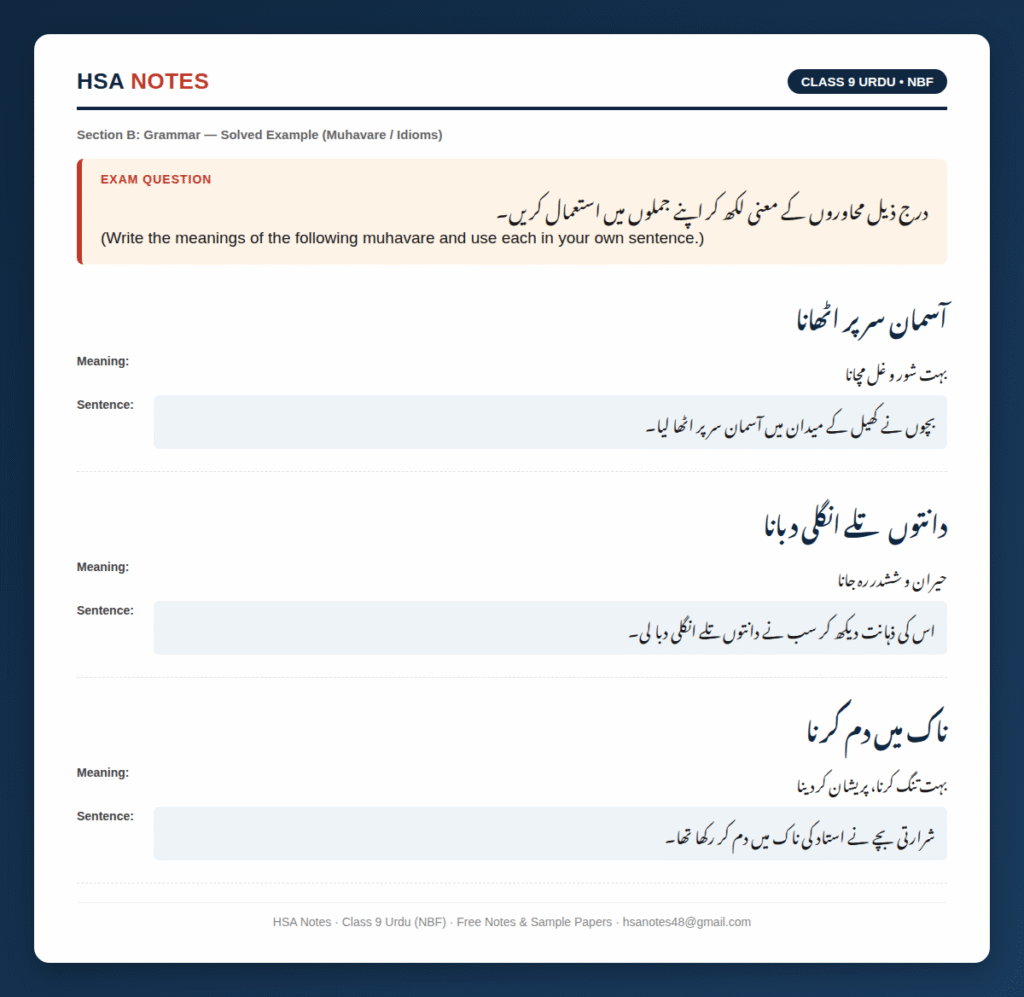
Grammar carries real weight in the FBISE Urdu paper and is easy to underprepare for, so a full section is devoted to muhavare, jama-wahid conversions, mذکر-مؤنث, jumla tabdeeli, and iaarab-related short questions — the recurring formats that show up almost every year in slightly different wording.
Finally, the composition section covers khط نگاری (both to a family member and a formal letter to a school or newspaper) and mضمون نویسی on the topics that come up repeatedly: مطالعے کی عادت, والدین کا احترام, وقت کی پابندی, and سیر و سیاحت among others.
What Is Included in Each Paper
Every paper mirrors the actual FBISE structure, so the goal isn’t just content revision — it’s paper-format familiarity.
Section A carries 15 MCQs drawn from vocabulary, meanings, poets, and writers. Section B has two unseen comprehension passages with short questions worth 2 marks each, a poetry explanation portion with reference-based questions, and a grammar section covering four to five recurring question types. Section C includes a letter (5 marks) and an essay of 300–350 words (9 marks), both built around the topics most likely to appear based on recent exam trends.
By the time a student has gone through all five papers, they’ve effectively rehearsed the entire exam three or four times over, in the exact sequence and mark distribution they’ll face on the day.
Quick Revision Summary Included
Alongside the five full papers, there’s a condensed revision summary that pulls together the meanings of difficult words, the names of writers and poets tied to each lesson, key muhavare with their meanings, and short definitions of grammar terms like مصرع, مطلع, and ردیف.
This is the part most students end up reaching for in the last two or three days before the exam, when there isn’t time left for long explanations and what’s needed is quick, reliable recall.
Why These Sample Papers Matter
Urdu is compulsory, and because it feels like a “familiar” subject, students sometimes treat it as something they can wing. That’s usually where the marks go missing — a misremembered muhavara, a poet’s name mixed up with another, an essay that runs out of structure halfway through. None of that is really about ability; it’s about not having practiced the specific format enough times.
Working through five sample papers under timed conditions builds the kind of muscle memory that a subject like this rewards recognizing which lesson a passage is from within the first two lines, knowing instantly which options in an MCQ are distractors, and having an essay outline ready before the pen even touches the page.
Who Should Use These Papers
Every Class 9 student appearing in the FBISE annual exam can use these, regardless of where they currently stand. Students who are already comfortable with the subject can treat these as timed mock tests in the final weeks. Students who are still catching up can use them the other way around — working backward from the questions to figure out exactly which lessons need another read-through. Teachers preparing test material or structured homework for their classes will also find the format directly usable.
Tips to Prepare Effectively
Attempt each paper the way you’d sit the real exam full length, no peeking at the answers first. Cover the model solutions, go through Section A, B, and C in order, and only check afterward.
Pay close attention to the alternative choices in the comprehension and poetry sections, since board papers usually give a choice between two passages, and knowing both well removes any last-minute hesitation. In the final week, rely on the revision summary rather than re-reading full lessons at that stage, speed of recall matters more than depth.
Why Choose HSA Notes
HSA Notes has been a go-to resource for FBISE and Punjab Board students for a while now, with free notes, sample papers, and online classes across subjects like Mathematics, Physics, Chemistry, Biology, Computer Science, English, Urdu, Islamiat, Tarjuma-tul-Quran, and Pakistan Studies. Everything is prepared by tutors who actually teach this material, and updated to track the current NBF curriculum and FBISE pattern rather than recycled from older syllabi.
Join HSA Notes Online Classes
If you want more than just the sample papers, HSA Notes also runs online classes from Class 8 through university level, across all Punjab Boards, FBISE, and other boards, with doubt-clearing sessions and focused paper practice built in. Reach out at Contact us: hsanotes48@gmail.com
Conclusion
These five Urdu sample papers, built for the FBISE New Book syllabus, give Class 9 students structured, format-accurate practice across prose, poetry, grammar, and composition for session 2026–27. Work through the revision summary in the last week, and go into the exam having already rehearsed the paper you’re about to sit.