
Introduction
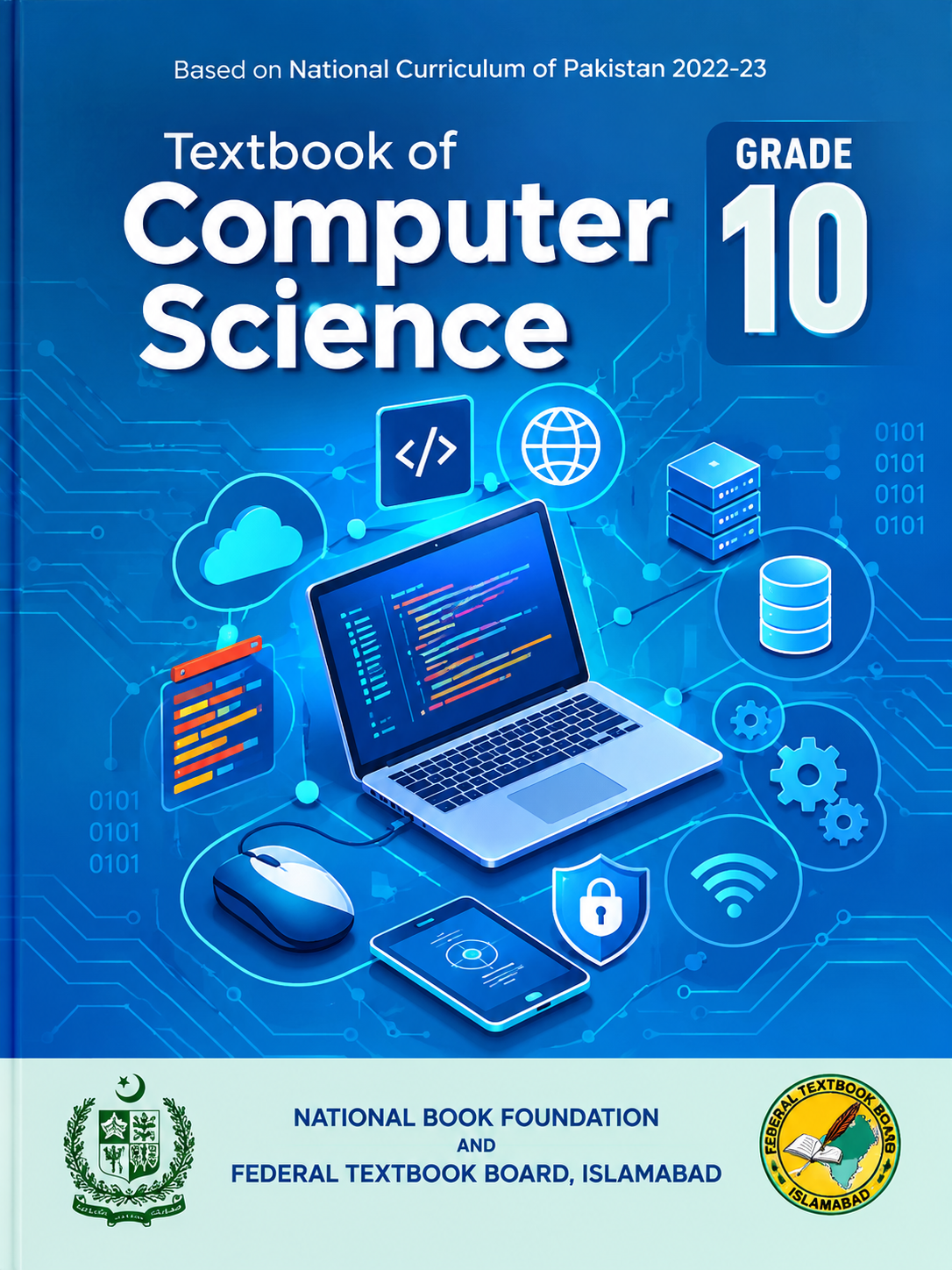
Dear Class 10 students, HSA Notes has prepared 5 complete sample papers for Computer Science, FBISE, based on the New Book (NBF) syllabus covering all 8 units, for the annual examination 2026.
Computer Science at this level isn’t just theory it’s a mix of concepts, coding, algorithms, and real-world applications and students need to see exactly how the FBISE paper tests each of those elements.
🎓 Online Classes with Experienced Experts
Computer Science requires a different kind of preparation than most subjects. You’re not just memorizing definitions you’re understanding logic, writing code snippets, drawing flowcharts, and applying concepts to solve problems. These sample papers are built to give students exactly that kind of practice.
Exam Pattern and Marks Distribution
The FBISE Computer Science paper for Class 10 has a specific structure, and knowing it ahead of time takes away last-minute surprises.
Paper Overview
Total Marks: 60 Time Allowed: 2.5 hours (150 minutes)
| Section | Type | Count | Marks Each | Total |
|---|---|---|---|---|
| A | MCQs | 13 | 1 | 13 |
| B | Short Questions | 11 | 2 | 22 |
| C | Extensive Questions | 4 | 6.25 | 25 |
What Each Section Tests
Section A (13 MCQs, 13 marks) covers quick recall of concepts, terminology, and basic logic across all 8 units. These are single-answer questions that test whether you know the fundamentals: What is an algorithm? What does HTML stand for? Which is a loop construct?
Section B (11 Short Questions, 22 marks) goes deeper. You’re not just recalling — you’re explaining. Define a variable. Write a simple JavaScript function. Draw a flowchart for a given problem. Explain the difference between a static and dynamic website. These questions directly connect to the units and often require a line or two of code or a diagram.
Section C (4 Extensive Questions, 25 marks) is where logic and application meet. You might be asked to write a complete SQL query, explain a full algorithm with pseudocode, design a security protocol for a given scenario, or analyze a given program and identify errors. These aren’t questions you can answer from memory alone you need to think through the logic.
All 8 Units Covered
Definitions of All 8 Units
Number Systems: The study of different ways of representing numbers, such as binary, decimal, octal, and hexadecimal systems.
Algorithms and Flowcharts: The study of step-by-step procedures and visual diagrams used to solve problems and represent processes.
Programming (HTML, CSS, JavaScript): The process of creating websites and digital applications using programming and web-development languages.
Data Science: The process of collecting, analyzing, and interpreting data to discover useful information and support decision-making.
Artificial Intelligence, IoT, and Blockchain: The study of intelligent machines, connected devices, and secure decentralized systems used in modern technology.
Cybersecurity and Data Protection: The practice of protecting computers, networks, systems, and data from unauthorized access, misuse, and cyber threats.
Digital Literacy and Society: The ability to use digital technologies safely, responsibly, and effectively in everyday life and society.
Entrepreneurship: The process of developing and managing a business idea, taking calculated risks, and creating value through innovation.
What’s Inside Each Sample Paper
Section A: 13 MCQs
Mixed across all 8 units. You might get 1–2 questions per unit on average, so no single topic dominates. Each question is self-contained and requires only basic recall or logic.
Section B: 11 Short Questions
Rotating focus. One paper might emphasize programming and algorithms; another might balance data science with cybersecurity. But across all 5 papers, every unit gets tested multiple times in short-question format. You’ll see SQL queries, flowchart-drawing prompts, code-writing requests, and concept-explanation questions.
Section C: 4 Extensive Questions
These are the “show your thinking” questions. You get 6.25 marks per question, and you need to show your working — whether that’s pseudocode, a diagram, a logic trace, or a paragraph explanation. Typical extensive questions ask you to:
- Write and trace an algorithm
- Analyze and debug a program
- Design a solution to a given problem
- Explain a concept with examples and diagrams
- Write SQL queries on a given dataset
Additional Study Tools Included
Beyond the 5 papers, students also get quick-reference materials:
Unit-Wise Topic Checklist
A simple list of sub-topics under each unit, so students know exactly which concepts are most likely to appear. For example, under Unit 3 (Programming), the checklist includes form elements, event handlers, loop structures, and string methods.
Marks-per-Unit Distribution Across All 5 Papers
A breakdown showing how many marks each unit typically gets across all 5 papers combined, so students can prioritize revision. For instance, Units 2 and 3 (Algorithms and Programming) might carry the most weight.
Why These Sample Papers Matter
Computer Science is cumulative and practical. Losing marks usually isn’t because you don’t know the concepts it’s because you haven’t practiced writing code under time pressure, tracing through algorithms quickly, or explaining logic clearly on paper. These papers fix exactly that.
Who Should Use These Sample Papers
Every Class 10 FBISE Computer Science student benefits from these. Students with strong fundamentals can use them for timed mock practice and to identify any weak units. Students still building confidence can work backward from the questions to see exactly which concepts and skills matter most. Teachers can use these as classroom tests or homework assignments.
Golden Tips for Exam Day
Time Management
Section A (MCQs): 20 minutes Section B (Short Qs): 60 minutes (about 5–6 min per question) Section C (Extensive Qs): 70 minutes (about 17–18 min per question) Revision: 5 minutes
Strategy Tips
Read every question twice before starting. In Section B, identify whether you need code, a flowchart, or an explanation before picking up the pen. In Section C, write pseudocode or a rough plan before finalizing your answer. Show all working — partial credit is real. Use the unit checklist in the final week to refresh memory on high-weight topics rather than re-reading entire units.
Why Choose HSA Notes
HSA Notes is a trusted resource for FBISE and Punjab Board students across all subjects, with free notes, sample papers, and online classes. Everything is prepared by tutors who actually teach Computer Science and updated to match the current NBF curriculum and FBISE exam pattern.
Join HSA Notes Online Classes
For extra support beyond these sample papers, HSA Notes offers online classes for Class 8 through Class 12, with live doubt sessions, coding walkthroughs, and focused exam practice. Reach out at hsanotes48@gmail.com
Conclusion
These 5 Computer Science sample papers, built for the FBISE New Book syllabus covering all 8 units, give Class 10 students complete, exam-format practice across MCQs, short questions, and extensive problem-solving. Download your free PDF, work through the unit checklist in your final week, and go into your 2026 exam fully prepared. Contact HSA Notes at hsanotes48@gmail.com or visit hsanotes.com for complete solutions and online class details.

Gioidhdhdjd
Thank you for your feedback! We’re glad the guide helped you. For more support, feel free to contact us at hsanotes48@gmail.com
Very Glad to see such high quaility Guess.
I never knew about it.
But it maybe helpful.
Thank you so much! We’re really glad you liked it. These guess papers are carefully prepared to help students focus on the most important topics and will hopefully be very useful for your preparation.
Regards,
HSA Notes Team
For contact: [hsanotes48@gmail.com](mailto:hsanotes48@gmail.com)
yei Open nhi horhy
Hi, Anal contact us: hsanotes48@gmail.com