
Introduction
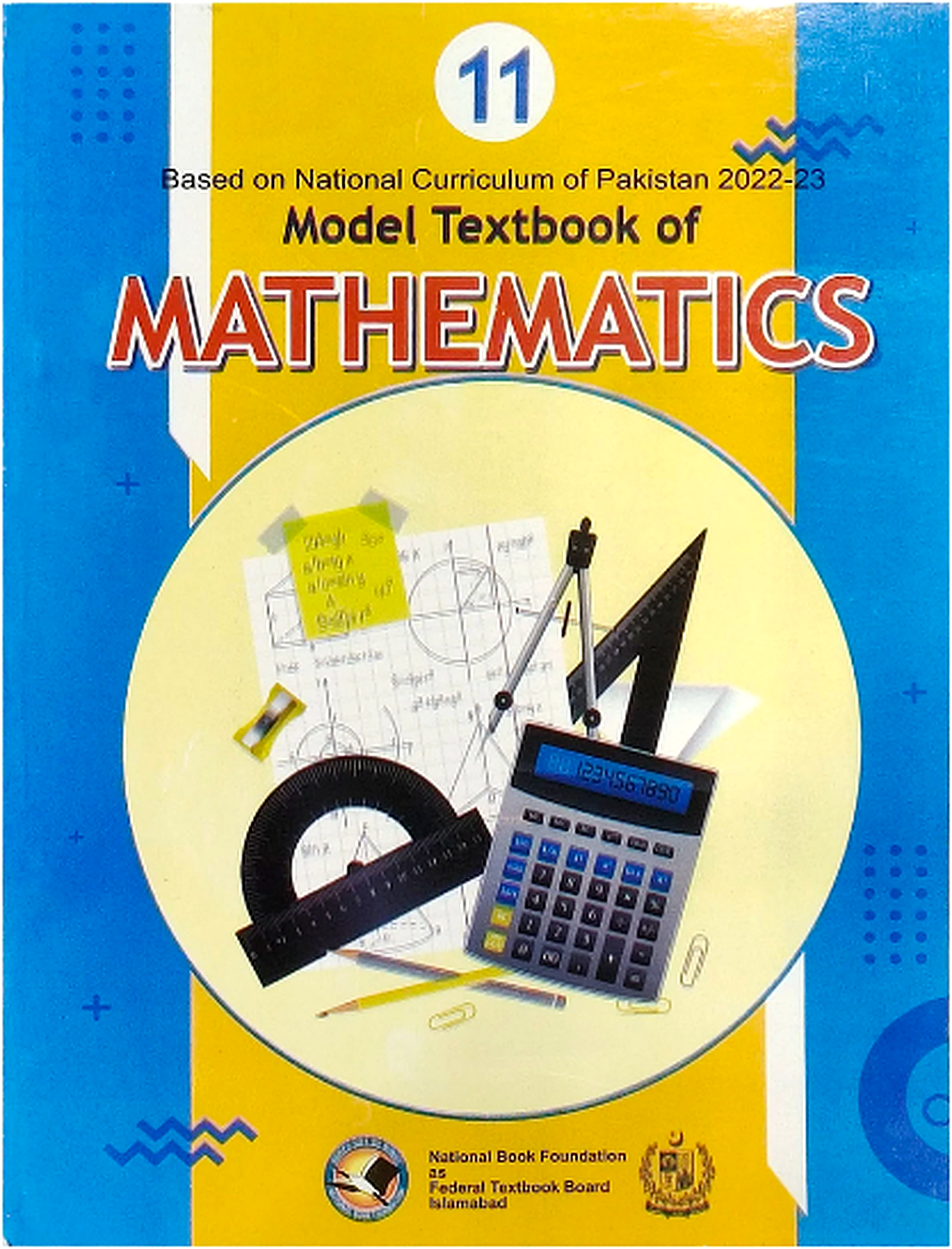
Preparing for Class 11 Mathematics under the FBISE NBF New Course 2026–2027 can be challenging, especially when students are studying from a newly introduced textbook and need complete solutions for every exercise. HSA Notes provides easy, solved, step by step Class 11 Mathematics notes based on the FBISE NBF New Book and designed to support students in understanding concepts, practicing textbook questions, and preparing effectively for board examinations.
- Complex Numbers
- Matrices and Determinants
- Vectors
- Sequences and Series
- Division of Polynomials
- Permutation and Combination
- Mathematical Induction and Binomial Theorem
- Fundamental Laws of Trigonometry
- Trigonometric Functions
These notes focus on clear mathematical methods, formulas, proper working, numerical problems, short questions, long questions, and MCQs. The aim is to make difficult mathematical concepts easier for weak, average, and high-performing students.
Class 11 Mathematics FBISE NBF New Course 2026–2027
The new Class 11 Mathematics curriculum introduces students to important areas of mathematics including complex numbers, matrices, vectors, sequences and series, polynomials, permutations and combinations, mathematical induction, binomial theorem, and trigonometry.
Students need more than just final answers to perform well in Mathematics. Understanding the correct formula, method, calculation, and reasoning is essential. HSA Notes therefore presents solutions in a simple and organized format so students can follow the complete working instead of memorizing answers.
The notes are particularly useful for students preparing according to the FBISE examination pattern, textbook exercises, and SLO-based preparation.
Highlights of Class 11 Mathematics Notes
The Class 11 Mathematics notes include:
- All available units covered
- Easy and understandable explanations
- Detailed step-by-step solutions
- Complete textbook exercise practice
- Formula-based numerical solutions
- Clear mathematical working
- Important concepts and definitions
- MCQs and objective preparation
- Short-question preparation
- Detailed long-question solutions
- Board-oriented practice
- SLO-focused preparation
- Useful revision material for examinations
The objective is to provide students with a single resource that can support concept learning, textbook practice, revision, and examination preparation.
Units Covered in Class 11 Mathematics
Unit 1: Complex Numbers
This unit introduces students to complex numbers and the relationship between real and imaginary numbers. Students learn important forms, operations, properties, conjugates, modulus, and related mathematical concepts. Solved examples help students understand how to apply formulas and perform calculations correctly.
Unit 2: Matrices and Determinants
Matrices provide an organized way of representing mathematical information in rows and columns. This unit covers important concepts related to matrices and determinants, including their operations, properties, and applications. Step-by-step solutions make calculations easier to understand and practice.
Unit 3: Vectors
Vectors are mathematical quantities that have both magnitude and direction. Students study vector representation, components, magnitude, direction, operations, and related concepts. The unit develops an important foundation for geometry, physics, and three-dimensional mathematics.
Unit 4: Sequences and Series
This unit deals with ordered patterns of numbers and their relationships. Students learn important types of sequences and series and develop methods for finding terms and sums. Solved questions help students identify patterns and apply the appropriate formulas to numerical problems.
Unit 5: Division of Polynomials
Division of polynomials develops important algebraic skills required for simplifying and solving polynomial expressions. Students learn polynomial division and related concepts, including methods used to determine factors and remainders. Detailed working makes complicated algebraic calculations easier to follow.
Unit 6: Permutation and Combination
Permutation and combination deal with the arrangement and selection of objects. Students learn the difference between arrangements and selections and apply appropriate formulas to solve counting problems. The notes provide clear methods for identifying which formula is required in different questions.
Unit 7: Mathematical Induction and Binomial Theorem
Mathematical induction provides a systematic method for proving mathematical statements, particularly those involving positive integers. The Binomial Theorem introduces methods for expanding expressions and determining specific terms and coefficients. Both topics require careful application of formulas and logical procedures, which are explained through solved examples.
Unit 8: Fundamental Laws of Trigonometry
This unit develops the fundamental concepts and laws of trigonometry. Students work with trigonometric relationships, identities, and formulas used to simplify and solve mathematical expressions. Proper working and formula application are especially important for examination questions from this area.
Unit 9: Trigonometric Functions
Students study trigonometric functions and their mathematical behavior in this unit. Concepts involving functions, values, relationships, and graphical representation help students develop a stronger understanding of trigonometry. Solved questions provide practice in applying the relevant formulas and concepts.
How These Notes Help in Exam Preparation
Mathematics requires regular practice. Reading a solution without understanding the method may not be enough to solve a similar question independently. For this reason, these notes emphasize the complete solution process.
For numerical questions, students can follow a simple pattern:
Formula → Substitution → Calculation → Working → Final Answer
This format helps students understand where values are placed in formulas and how the final result is obtained.
For short questions, important definitions, laws, formulas, and concepts are presented clearly. For long questions, detailed solutions help students understand the complete mathematical procedure.
Useful for Weak, Average, and High-Performing Students
These Class 11 Mathematics notes are designed to support students with different levels of preparation.
Weak students can use the simple explanations and detailed working to build their understanding from the basics.
Average students can use the solved exercises for practice, revision, and improving their problem-solving speed.
High-performing students can use the notes as a revision and checking resource while focusing on challenging questions and time management.
The notes can therefore serve as a supplementary resource throughout the academic year.
Join Online Classes and Get Mathematics Guidance
Students who need additional assistance with Class 11 Mathematics can also seek structured online learning and doubt-clearing support through
Live online classes can help students understand difficult concepts, discuss numerical problems, practice textbook exercises, and resolve questions that remain unclear during self-study.
For online classes and further guidance, contact:
Email: hsanotes48@gmail.com
Frequently Asked Questions
How many units are included in these Class 11 Mathematics notes?
The provided FBISE NBF New Course material covers 9 listed units, from Complex Numbers to Trigonometric Functions. Students should check the latest official textbook for the complete current syllabus and any subsequent additions or revisions.
Are these notes suitable for FBISE students?
Yes. These notes are prepared around the FBISE NBF New Course 2025–2026 and focus on textbook-based learning, solved questions, formulas, numerical problems, and board-oriented preparation.
Are the solutions easy to understand?
The solutions are presented in a detailed and organized manner, with formulas, calculations, working, and final answers explained clearly to support students at different preparation levels.
Can weak students use these Mathematics notes?
Yes. The notes are designed with simple explanations and detailed working so that students who find Mathematics difficult can follow the concepts and practice questions more comfortably.
Should I study the textbook along with these notes?
Yes. Students should study the official textbook and use solved notes as supplementary material for understanding, practice, revision, and checking their solutions.
Conclusion
Class 11 Mathematics FBISE NBF New Course 2026–2027 introduces students to important mathematical concepts that require both conceptual understanding and regular practice. HSA Notes provides easy and detailed solved material covering the listed units, including Complex Numbers, Matrices and Determinants, Vectors, Sequences and Series, Division of Polynomials, Permutation and Combination, Mathematical Induction and Binomial Theorem, Fundamental Laws of Trigonometry, and Trigonometric Functions.