
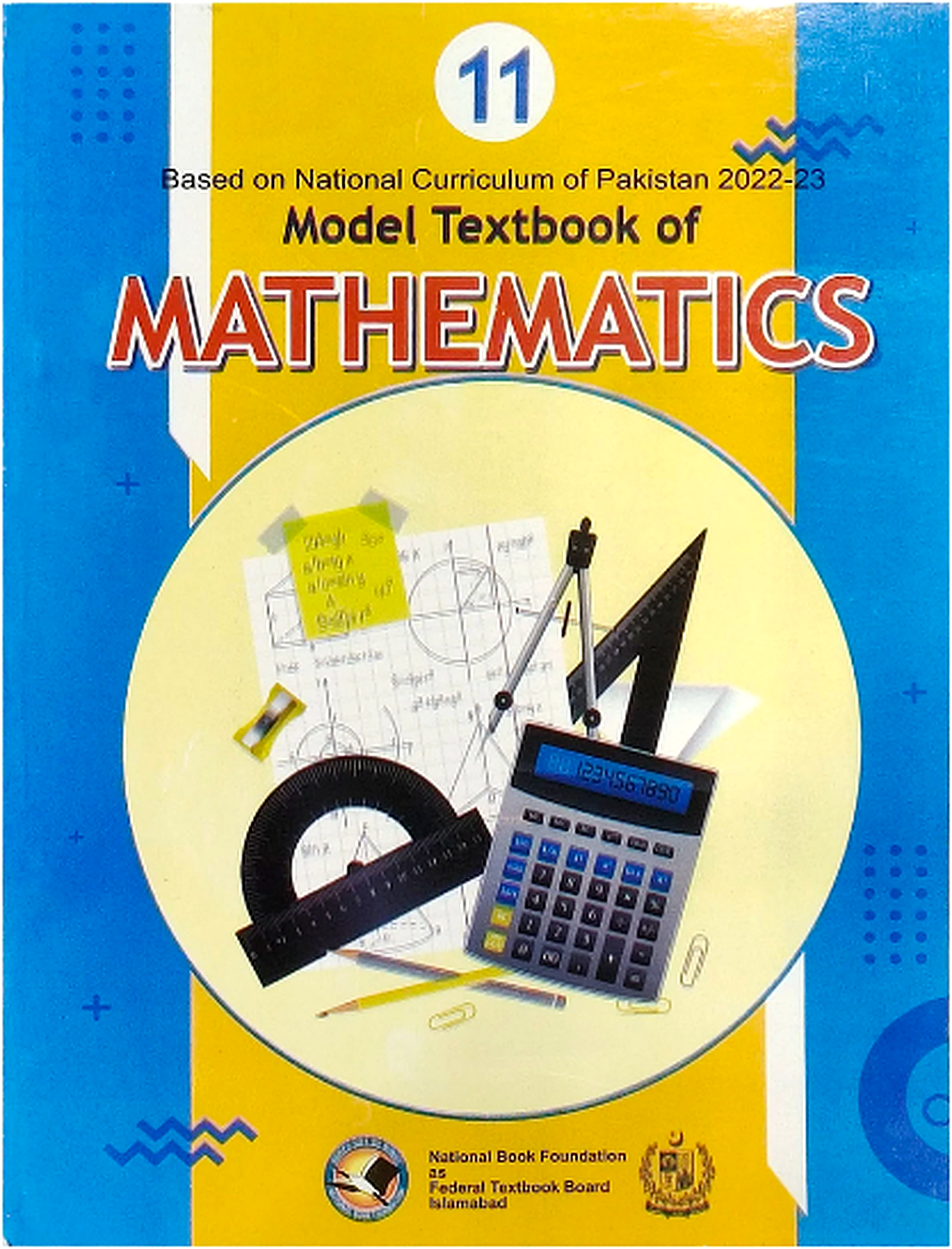
introduction
Prepare Class 11 Mathematics Unit 6: Permutations and Combinations with complete solved exercises from HSA Notes. These notes are prepared according to the FBISE NBF New Book and New Course for Session 2026–27 and cover Exercises 6.1, 6.2, 6.3, and the Review Exercise.
🎓 Online Classes with Experienced Experts
Permutations and Combinations is an important unit of Class 11 Mathematics. It introduces students to the fundamental principles of counting and helps them determine the number of possible arrangements and selections. The unit covers factorial notation, permutations, combinations, circular arrangements, restricted arrangements, and practical counting problems.
HSA Notes presents the solutions in a clear, short, and exam-focused format so students can understand the required formulas and apply them correctly in numerical questions.
HSA Notes Features
- Complete Exercises 6.1–6.3 and Review Exercise
- Based on the FBISE NBF New Book
- Updated for Session 2026–27
- Short and exam-ready solutions
- Factorial notation
- Permutation formula nPr
- Combination formula nCr
- Circular permutations
- Restricted permutations
- Arrangement and selection problems
- Important numerical questions
- Diagrams and mathematical working
- PDF for revision and practice
Unit 6: Permutations and Combinations
Permutations and combinations are methods used to count possibilities without listing every individual outcome. A permutation considers the arrangement or order of selected objects, while a combination considers selection where order does not create a different selection.
Factorials form the foundation of this unit. For a positive integer n,
n! = n(n − 1)(n − 2) … 3 × 2 × 1
The unit then develops permutation and combination formulas and applies them to different mathematical situations.
Exercise 6.1 Factorial
Exercise 6.1 introduces factorial notation and its applications. Students learn how to simplify factorial expressions, solve equations involving factorials, and determine unknown values.
Selected solved answers include:
Q1(i) 10! = 3628800
Q1(ii) 7920
Q1(iii) 11/63
Q1(iv) n − 1
Q1(v) 56/720 = 7/90
Other important questions include:
Q2(i) 14!/10!
Q2(ii) 9!/(2⁴ · 4!)
Students also solve equations to determine the value of n.
Q5(i) n = 6
Q5(ii) n = 6
Further results are:
Q7(i) n = 31
Q7(ii) n = 8
Q7(iii) n = 3
Q7(iv) n = 10
Careful cancellation and correct use of factorial notation are important when solving these questions.
Exercise 6.2 Permutations
Exercise 6.2 introduces permutations, where the order of objects matters. Students learn how to use permutation notation and apply it to arrangements of numbers, letters, objects, flags, and people.
Selected results include:
Q3(i) r = 4
Q3(ii) r = 5
Q3(iii) r = 2
Q3(iv) r = 8
Q3(v) r = 2
Q3(vi) r = 3
Students also solve counting problems involving numbers and arrangements.
Q4 60 three-digit even numbers
Q5 60480 seven-digit mobile numbers
Circular arrangements are another important part of this exercise.
Q7 144 round table arrangements (no two women adjacent)
Other selected answers include:
Q8 1260 flag signals
Q10 120 words ending with F
Q12 12 vowel-odd arrangements
Q13 4320 vowels not together
Q19 30240 three together
Q20 86400 alternate round table
These questions help students understand how restrictions change the number of possible arrangements.
Exercise 6.3 Combinations
Exercise 6.3 focuses on combinations, where the order of selected objects does not matter. Students learn to distinguish combinations from permutations and use combination formulas to solve selection problems.
Important results include:
Q2(i) n = 13
Q2(ii) n = 22
Q2(iii) n = 51
Q2(iv) n = 6
Q2(v) n = 14
Students also determine unknown values of r.
Q3(i) r = 3
Q3(ii) r = 3 or 5
Q3(iii) r = 6
Q3(iv) r = 5
Further selected results are:
Q4(i) n = 9, r = 5
Q4(iii) n = 10, r = 5
Q5(i) 524160
Q5(ii) 3003
Q6 55
Q7(i) 120
Q7(ii) 186
The exercise also includes geometric and selection applications.
Q8 120 triangles
Q9 n(n − 3)/2 diagonals
Q10 120
Q11 n = 10
Review Exercise 6
The Review Exercise combines the main concepts studied in Unit 6. Students should revise factorials, permutations, combinations, circular arrangements, restricted arrangements, and selection problems before attempting the review questions.
It is important to identify whether a problem requires an arrangement or a selection. If order matters, a permutation is generally considered; if order does not matter, a combination is used.
FBISE Exam Preparation
For the FBISE Class 11 Mathematics examination, students should understand the difference between nPr and nCr and know when each formula is applicable. Factorial simplification should also be practiced carefully.
Special attention should be given to circular permutations, restricted arrangements, number formation, word arrangements, selection problems, and application-based questions.
Students should attempt the textbook questions independently before checking the solved notes. This helps improve mathematical reasoning and reduces dependence on memorized answers.
View the Complete PDF
The complete Class 11 Math Unit 6 Permutations and Combinations solved PDF contains detailed mathematical working, formulas, diagrams, and solutions for Exercises 6.1, 6.2, 6.3, and the Review Exercise.
Who Can Use These Notes?
These notes are useful for students preparing for FBISE and Punjab Board examinations. They can support learners from schools such as Beaconhouse, Roots, LGS, City School, Karachi Grammar, Aitchison, Lawrence, ICG, APS, and FPS.
Students can use the material for classroom learning, homework, self-study, revision, and examination practice.
Join Classes and Get Support
Students who require additional academic support with Class 11 Mathematics can use HSA Notes for exercise practice and revision. Regular practice of permutations and combinations can help students develop greater accuracy in counting and mathematical reasoning.
Email: hsanotes48@gmail.com
Conclusion
Class 11 Mathematics Unit 6: Permutations and Combinations provides essential counting techniques used throughout mathematics and related subjects. From factorials and permutations to combinations, circular arrangements, and restricted counting problems, students need to understand both the formulas and their applications.
HSA Notes provides complete solved Unit 6 Permutations and Combinations notes for the FBISE NBF New Book, Session 2026–27, covering Exercises 6.1–6.3 and the Review Exercise. Use these notes with the textbook to revise formulas, practice numerical questions, understand arrangement and selection methods, and strengthen preparation for the Class 11 Mathematics examination.