
Introduction
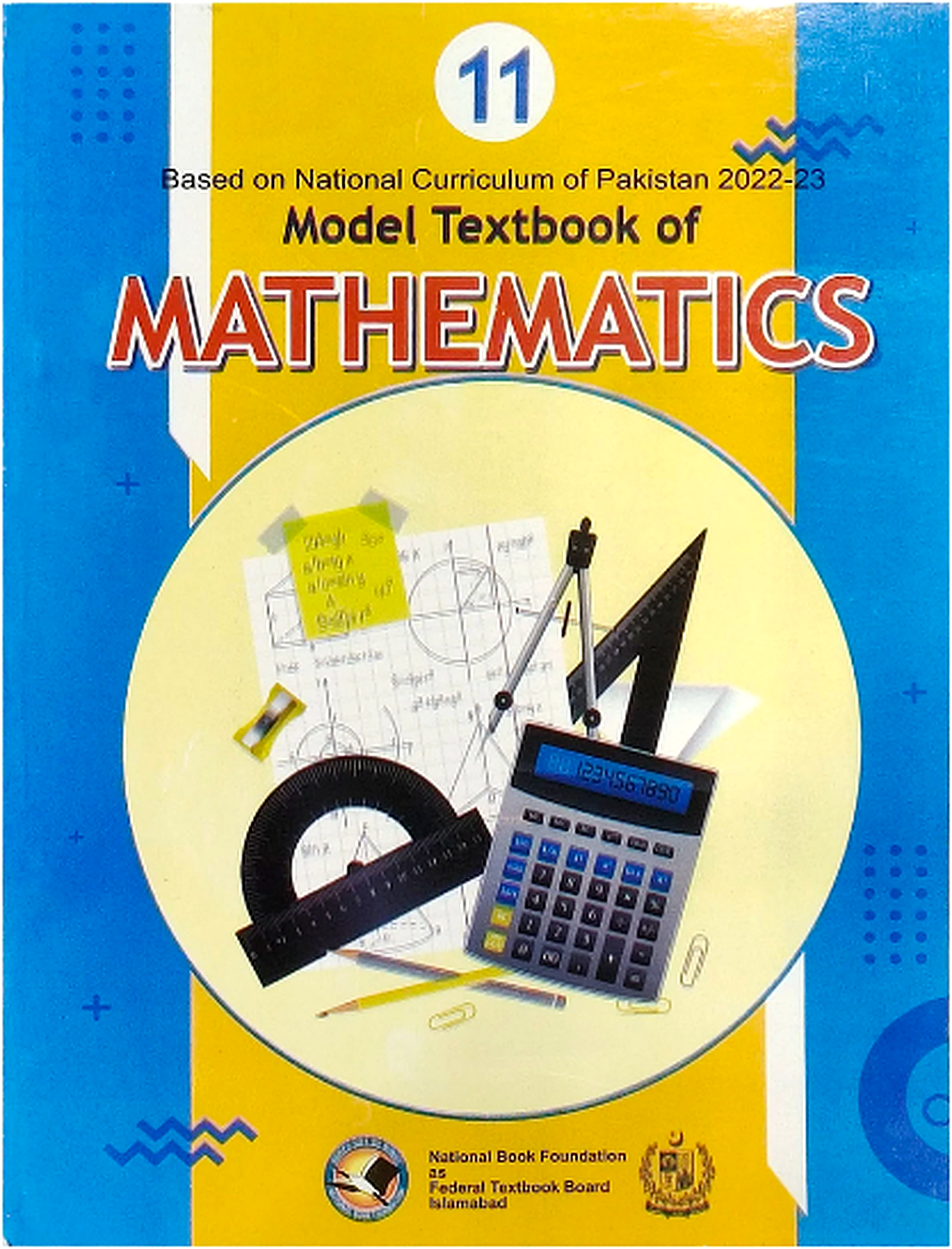
Prepare Class 11 Mathematics Unit 3: Vectors with complete, easy, and step-by-step solved notes from HSA Notes. These notes are designed for students studying the FBISE NBF New Book and New Course for Session 2026–27 and cover all four textbook exercises, Exercises 3.1, 3.2, 3.3, 3.4, and the Review Exercise.
🎓 Online Classes with Experienced Experts
HSA Notes provides detailed mathematical working so students can understand the method used to obtain each answer rather than memorizing final results.
HSA Notes Features
These Class 11 Vectors notes include:
- Complete solutions for Exercises 3.1–3.4
- Complete Review Exercise preparation
- Easy and exam-focused explanations
- Step-by-step mathematical working
- Vector addition and subtraction
- Magnitude and unit vectors
- Collinearity and parallelism
- Dot product and projections
- Angles between vectors
- Cross product and applications
- Area and torque problems
- Scalar triple product
- Coplanarity
- Important MCQs
- Short and long questions
- Proof-based questions
- Diagrams and mathematical representations
- Revision material for FBISE examinations
Unit 3 Vectors – Exercise 3.1
Exercise 3.1 introduces the fundamental concepts of vectors. Students learn vector notation, position vectors, vector addition and subtraction, scalar multiplication, magnitude, unit vectors, collinearity, and parallelism.
Selected solved results include:
Q1(i) →PQ = (-7,-5)
Q1(ii) 3→PQ – →RS = (-22,-16)
Q1(iii) 2→PR + 3→PS = (-7,28)
Q1(iv) (-35/2, -13/2)
Q1(v) (-18,155)
Students also practice identifying collinear vectors and determining unknown values from vector relationships.
Q2(i) Collinear (parallel to x-axis)
Q2(ii) m = -44/7
Other important results include:
Q3(i) →x = (2/3, 2/3)
Q3(ii) →u = (-5,8), →v = (7,-11)
Q3(iii) I = (8,-1,-1)
Q4(i) m = 4/3
For unit vectors, students learn how to divide a vector by its magnitude. One selected result is:
Q5(i) →v = (1,-1,6); unit = (1/√38, -1/√38, 6/√38)
The exercise also includes geometric applications, such as determining whether a triangle is right-angled.
Q6(i) Right-angled at B
Exercise 3.2 – Dot Product, Projections and Angles
Exercise 3.2 develops the concept of the dot product of two vectors and its applications. Students learn how to calculate scalar products, determine angles between vectors, find projections, and use vector relationships to solve geometric problems.
Important solved results include:
Q1 →a · →b = -5; →a · →c = 3
For vector addition and magnitude:
Q3(i) →a + →b + →c = (6,0,6); |sum| = 6√2
Students also work with position vectors and calculate vectors between points.
Q6(i) →AB = (3,2,6), →AC = (5,8,3); →BC = (2,6,-3)
Another important result is:
Q7(i) →a + →b + →c = (9,5,9); magnitude √227
The unit also includes the important identity:
Q9(i) |→a + →b|² = |→a|² + |→b|² + 2→a·→b
Understanding this identity helps students simplify vector expressions and solve problems involving magnitudes and dot products.
Exercise 3.3 – Cross Product, Area and Torque
Exercise 3.3 introduces the vector cross product and its applications. Unlike the dot product, the cross product produces a vector. Students learn how to calculate →a × →b and apply it to problems involving perpendicular vectors, areas, and torque.
A selected result is:
Q1(i) →a × →b = 4→i -15→j +7→k
Students also learn how a cross product can be used to find a vector perpendicular to a plane.
Q4(i) Vector magnitude 5 ⊥ to plane: multiple answers possible
The unit includes calculations involving vector magnitudes and unit vectors.
Q6(i) →a × →b = 15√15 /4 unit vector check
Other questions involve determining vector magnitudes:
Q9(ii) |→a| = 2, |→b| = 5
The cross product also has important applications in mechanics. Students encounter torque problems in which the magnitude of torque is determined using vectors.
Q14(i) Torque magnitude √57 N·m
These applications demonstrate how vectors are used beyond pure mathematics.
Exercise 3.4 – Scalar Triple Product and Coplanarity
Exercise 3.4 introduces the scalar triple product and its applications in three-dimensional geometry. Students learn how three vectors can be combined through the scalar triple product and how the result can be used to determine volume and coplanarity.
An important property covered in the exercise is the cyclic property:
Q1 Cyclic property proved: →a·(→b×→c) = →b·(→c×→a) = →c·(→a×→b)
Students also learn the condition for three vectors to be coplanar.
Q3(i) Coplanar if [→a →b →c] = 0
The scalar triple product can also be used to calculate the volume of a parallelepiped.
Q7 Volume = -18 (parallelepiped)
The detailed notes explain the mathematical procedure used to obtain these results.
Review Exercise 3
The Review Exercise 3 brings together important concepts from the complete unit. Students should revise vector operations, magnitude, unit vectors, dot products, cross products, scalar triple products, and their applications before attempting the review questions.
An example from the Review Exercise is:
MCQ(i) Direction vector →i + 2→j -2→k; magnitude 3
Review questions are useful for identifying areas that need additional practice before the FBISE examination.
FBISE Exam Preparation
For the FBISE Class 11 Mathematics examination, students should practice both conceptual and numerical questions from Unit 3. Vector problems often require accurate use of formulas, correct signs, proper notation, and organized mathematical working.
HSA Notes presents solutions in an easy format so students can compare their own working with the complete solution. Students should first attempt each question independently and then use the notes to identify calculation or conceptual mistakes.
Important preparation areas include MCQs, short questions, numerical problems, proofs, and long questions.
Why Use HSA Notes for Unit 3?
HSA Notes makes Unit 3 easier to revise by bringing the important concepts and solved exercises together in one resource. Students can use the notes for classroom revision, homework, independent study, and examination preparation.
The material is particularly useful for understanding the difference between the dot product and cross product, practicing vector calculations, revising formulas, and applying vectors to geometry and mechanics.
View the Complete PDF
The complete Class 11 Vectors Unit 3 solved PDF contains detailed solutions for Exercises 3.1, 3.2, 3.3, 3.4, and the Review Exercise, along with diagrams, proofs, formulas, and worked examples.
Use the PDF alongside the FBISE NBF New Book for Session 2026–27 for systematic preparation.
Join Online Classes
Students who need additional support with Class 11 Mathematics can join online classes for concept explanation, textbook exercise practice, numerical problems, and doubt clearing.
Email: hsanotes48@gmail.com
Frequently Asked Questions
What is Unit 3 of Class 11 Mathematics?
Unit 3 is Vectors. It covers vector basics, magnitude, unit vectors, dot product, cross product, scalar triple product, and applications.
How many exercises are covered?
The notes cover four exercises: 3.1, 3.2, 3.3, and 3.4, followed by the Review Exercise.
Are these notes for the FBISE NBF New Book?
Yes. They are prepared for the FBISE NBF New Book and New Course for Session 2026–27.
Are the vector solutions step-by-step?
Yes. The notes provide detailed mathematical working, formulas, calculations, and final results to help students understand the solution method.
Conclusion
Class 11 Mathematics Unit 3: Vectors introduces important mathematical techniques used in algebra, geometry, physics, and three-dimensional mathematics. With topics ranging from basic vector operations to dot products, cross products, torque, scalar triple products, and coplanarity, regular practice is essential.
HSA Notes provides full solved Unit 3 Vectors notes for the FBISE NBF New Book, Session 2026–27, covering Exercises 3.1–3.4 and the Review Exercise. Students can use these notes with their textbook to understand concepts, practice questions, revise formulas, and strengthen their preparation for the FBISE Class 11 Mathematics examination.