
Introduction
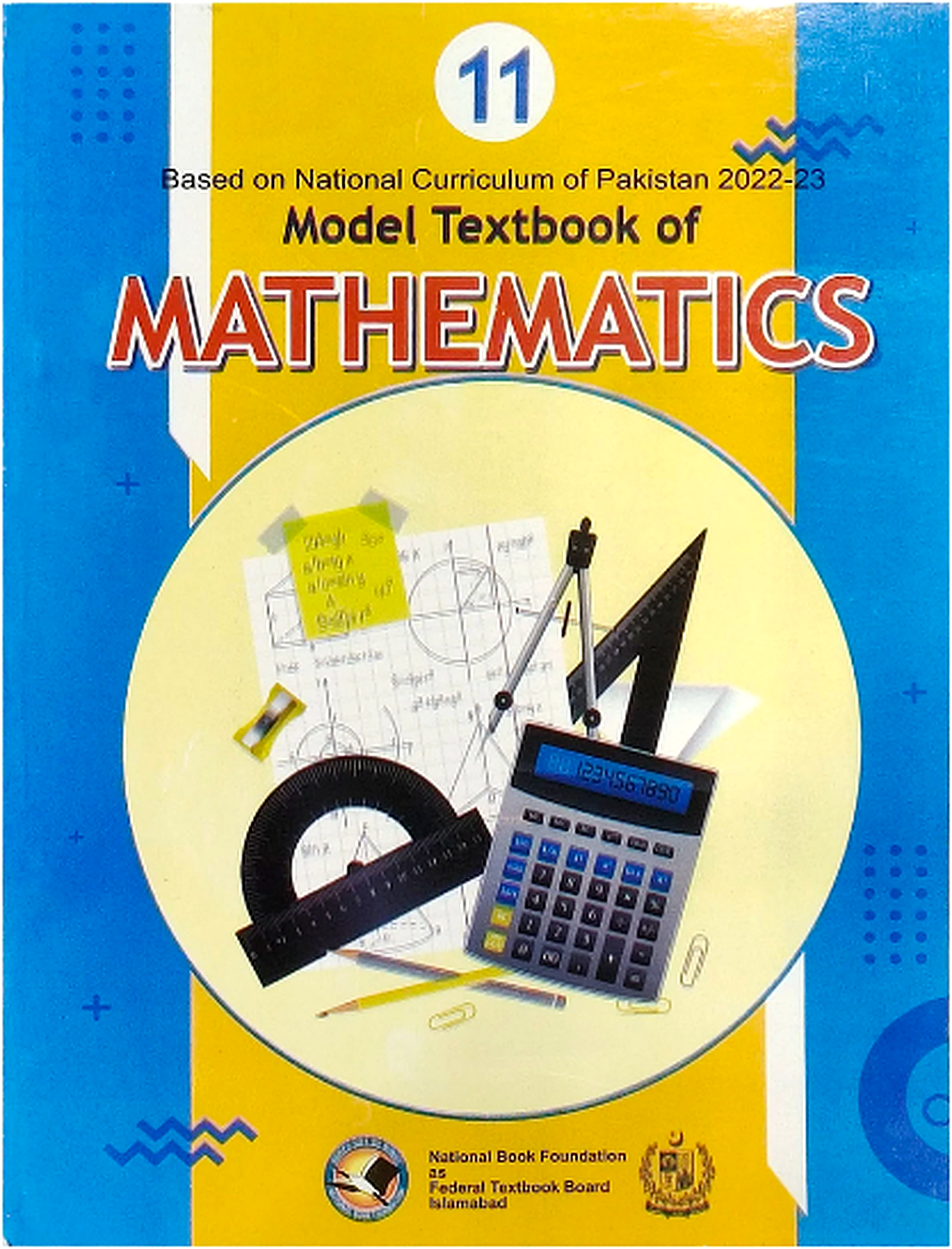
Prepare Class 11 Mathematics Unit 4: Sequences and Series with complete solved exercises from HSA Notes. These notes are designed according to the FBISE NBF New Book and New Course for Session 2026–27 and cover Exercises 4.1 to 4.8 and the Review Exercise.
🎓 Online Classes with Experienced Experts
HSA Notes Features
- Complete Exercises 4.1–4.8 and Review Exercise
- Based on the FBISE NBF New Book
- Updated for Session 2026–27
- Short and exam-ready solutions
- Arithmetic, geometric and harmonic progressions
- Sigma notation and summation formulas
- Infinite sums and their applications
- Important numerical problems
- Proof-based questions and formulas
- PDF with diagrams and worked examples
- Useful for FBISE and Punjab Board students
Unit 4: Sequences and Series
A sequence is an ordered list of numbers arranged according to a particular rule. A series is obtained when the terms of a sequence are added. In this unit, students learn how to identify patterns, find general terms, calculate sums, and apply progression formulas to mathematical and real-life problems.
The complete Unit 4 notes cover Exercises 4.1, 4.2, 4.3, 4.4, 4.5, 4.6, 4.7, 4.8, and the Review Exercise.
Exercise 4.1 General Term
Exercise 4.1 focuses on finding the general term of different sequences. Students learn how to recognize numerical patterns and determine specific terms such as a₁₀ and a₁₅.
Selected solved answers include:
Q1(i) 4, 7, 10, 13; a₁₀ = 31, a₁₅ = 46
Q1(ii) 2, 5, 8, 11; a₁₀ = 29, a₁₅ = 44
Q1(iii) ½, ⅔, ¾, ⅘; a₁₀ = 10/11, a₁₅ = 15/16
Q1(iv) 2, 5, 10, 17; a₁₀ = 101, a₁₅ = 226
Q1(v) -1, 0, 3, 8; a₁₀ = 80, a₁₅ = 195
Other important sequences include:
Q1(vi) 0, 3/5, 4/5, 15/17; a₁₀ = 99/101, a₁₅ = 112/113
Q1(vii) 1, -½, ¼, -⅛; a₁₀ = -1/512, a₁₅ = 1/16384
Q1(viii) -1, 4, -9, 16; a₁₀ = 100, a₁₅ = -225
Q1(ix) -4, 5, -6, 7; a₁₀ = 13, a₁₅ = -18
Exercise 4.2 Arithmetic Progression
Exercise 4.2 introduces the Arithmetic Progression (A.P.), in which consecutive terms have a constant difference. Students practice finding missing terms, common differences, specific terms, and values of n.
Important answers include:
Q1(i) 4, 7, 10, 13
Q2(i) 17, 21, 25
Q4 19, 16.5, 14, 11.5
Q5 8, 5, 2, -1, -4
Q7 n = 20
Q10 a₈ = 240 ft
Q11 S₂₀ = 400000 Rs
Exercise 4.3 Sum of an A.P.
This exercise focuses on calculating the sum of terms in an arithmetic progression. Students learn how to apply the appropriate formula to finite sequences and real-life problems.
Selected results are:
Q1 S₈ = 116
Q8 S₅₀ = 2550 (even 2 to 100)
Q9 S₅₀ = 2500 (odd 1 to 99)
Q17 S₁₆ = 816
Q23 S₂₅ = 950 marchers
Exercise 4.4 Geometric Progression
Exercise 4.4 introduces the Geometric Progression (G.P.), where each term is obtained by multiplying the preceding term by a constant ratio.
Important answers include:
Q3 r = 3/2
Q5 3, -6, 12, -24
Q8 10/3, 10/9
Q14 a₃ = 100
Q20 Means: 6, 12, 24
Exercise 4.5 Sum of a G.P.
Students learn how to calculate the sum of the terms of a geometric progression and apply G.P. formulas to practical situations.
Selected solved answers include:
Q1 S₁₁ = 176
Q2 ≈ 93.75
Q15 Total distance = 70 ft
Q16 Maximum height = 800 ft
These questions help students understand how geometric progressions can model repeated growth, reduction, and distance problems.
Exercise 4.6 Harmonic Progression
Exercise 4.6 covers the Harmonic Progression (H.P.) and its relationship with arithmetic and geometric means.
Important results include:
Q1 7th term = 1/27
Q7 14th term = 1/43
Q10 H.M. = 9.9; A = 10, G = 3√11, AH = G²
Understanding the relationship between Arithmetic Mean, Geometric Mean, and Harmonic Mean is important for conceptual and numerical questions.
Exercise 4.7 Sigma Notation and Formulas
Exercise 4.7 introduces Sigma (∑) notation and important summation formulas. Students learn how to express and evaluate sums efficiently.
Selected answers include:
Q1 31/32
Q7 43
Q8 10/11
An important result is:
Q13 ∑k³ = [n(n+1)/2]² proved
Students should practice the standard summation formulas carefully because they can appear in numerical and proof-based questions.
Exercise 4.8 Applications
Exercise 4.8 applies sequences and series to real-world mathematical situations. These questions require students to identify the correct progression, select the appropriate formula, and interpret the final result.
Selected answers include:
Q1 780 ft
Q2 1065 seats → No
Q3 491700 Rs
Q4 Day 20: 524288 Rs
Review Exercise 4
The Review Exercise combines concepts from the complete unit. Students should revise general terms, A.P., sums of A.P., G.P., sums of G.P., H.P., sigma notation, infinite sums, and applications before attempting the review questions.
FBISE Exam Preparation
For effective preparation, students should understand the formulas and also practice their application. Pay particular attention to the difference between A.P., G.P., and H.P., general-term formulas, sum formulas, sigma notation, and application-based numerical questions.
Who Can Use These Notes?
These notes are useful for students preparing through FBISE and Punjab Boards, including learners from schools such as Beaconhouse, Roots, LGS, City School, Karachi Grammar, Aitchison, Lawrence, ICG, APS, and FPS.
Join Classes and Get Support
Students who need additional help with Class 11 Mathematics can use these notes for revision and exercise practice. Additional academic support can help students strengthen concepts and prepare systematically for examinations.
Email: hsanotes48@gmail.com
Conclusion
Class 11 Mathematics Unit 4: Sequences and Series provides essential concepts for understanding numerical patterns and mathematical progressions. From general terms and arithmetic progressions to geometric and harmonic progressions, sigma notation, sums, and applications, the unit requires regular practice.
HSA Notes provides complete solved Unit 4 notes for the FBISE NBF New Book, Session 2026–27, covering Exercises 4.1 to 4.8 and the Review Exercise. Use these notes with the textbook to revise formulas, practice numerical questions, understand solution methods, and strengthen preparation for the Class 11 Mathematics examination.