
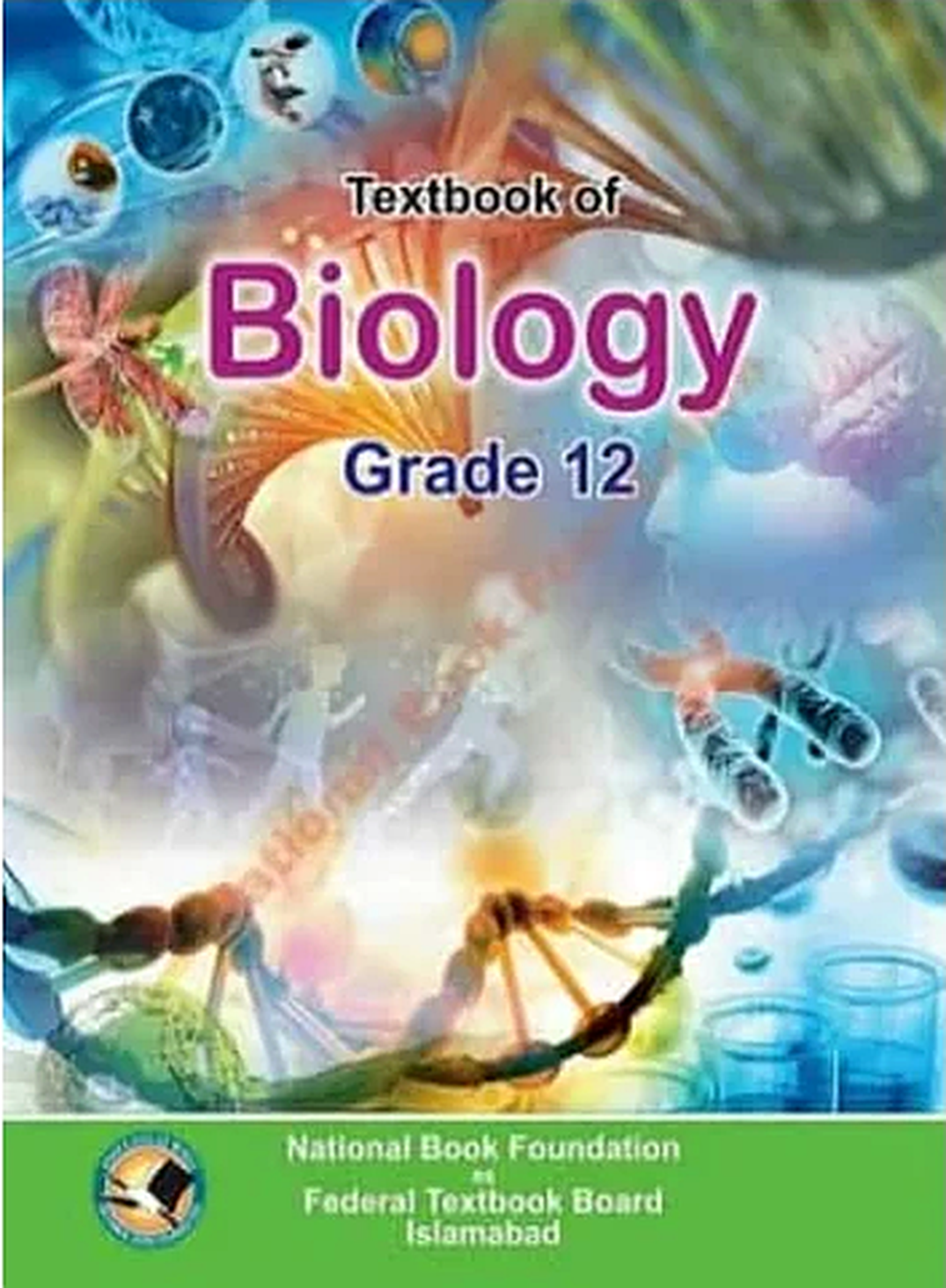
Introduction
The Class 12 Biology syllabus is based on the latest curriculum of the National Book Foundation and follows the official examination system of the Federal Board of Intermediate and Secondary Education. This subject is highly important for Pre-Medical students because it builds the foundation for medical, dental, and allied health sciences. It develops conceptual understanding of human physiology,
biotechnology, and environmental biology in a structured way.
Class 12 Notes
HSA Notes provides complete notes
Unit 1: Digestive System of Man
This unit explains the structure and function of the human digestive system including mouth, stomach, liver, pancreas, and intestines. It covers digestion process, enzymes (amylase, pepsin, lipase), absorption of nutrients, and common digestive disorders like ulcer and constipation.
Unit 2: Blood Circulatory System of Man
This unit describes heart structure, blood vessels, and blood components. It explains double circulation, oxygen transport, blood pressure regulation, and cardiovascular diseases such as hypertension and heart attack.
Unit 3: Respiratory System of Man
This unit covers lungs, trachea, bronchi, and alveoli. It explains breathing mechanism, gas exchange, oxygen transport, and respiratory disorders like asthma and bronchitis.
Unit 4: Urinary System of Man
This unit explains kidneys, nephron structure, urine formation, and osmoregulation. It also includes kidney diseases and dialysis process.
Unit 5: Nervous System of Man
This unit focuses on neurons, brain structure, spinal cord, reflex actions, and coordination of body activities through nerve impulses.
Unit 6: Endocrine System of Man
This unit explains hormones, endocrine glands (pituitary, thyroid, pancreas), and their role in growth, metabolism, and homeostasis.
Unit 7: Skeletal System of Man
This unit covers bones, joints, skeleton types, movement mechanism, and bone disorders like arthritis and osteoporosis.
Unit 8: Thermoregulation & Homeostasis
This unit explains how the human body maintains internal balance of temperature, glucose level, water balance, and pH through feedback mechanisms.
Unit 9: Immunity
This unit describes defense system of the body, white blood cells, antibodies, vaccines, and types of immunity (innate and acquired).
Unit 10: Biotechnology
This unit explains DNA technology, genetic engineering, cloning, and applications of biotechnology in medicine and agriculture.
Unit 11: Biostatistics and Data Analysis
This unit covers data collection, representation, graphs, mean, median, mode, and interpretation of biological data.
Unit 12: Structural & Computational Biology
This unit introduces molecular biology, protein structure, DNA analysis, and computer-based biological research techniques.
Unit 13: Climate Change
This unit explains global warming, greenhouse effect, pollution, and environmental impacts on ecosystems.
Unit 14: Selected Topics
This unit includes important applied biological concepts and modern scientific developments relevant to real-life situations.
Unit 15: Pharmacological Drugs
This unit explains medicines, antibiotics, drug types, effects on the human body, and safe use of drugs in treatment.
Marks Distribution (Total = 80 Marks)
Objective Section (MCQs)
The objective part consists of 17 MCQs. Each question carries 1 mark, making a total of 17 marks. These questions test basic concepts, definitions, and factual knowledge from all units.
Subjective Section
Short Questions
This section includes 14 questions, each carrying 3 marks. Students usually attempt OR-based questions. This section tests conceptual clarity, short explanations, definitions, and processes. It is very important for scoring good marks because answers are direct and structured.
Long Questions
This section contains 4 questions, each carrying 6–7 marks. These are also OR-based. Students must write detailed answers with headings, explanations, and diagrams. This section checks deep understanding and analytical writing skills.
Time Management
MCQs Section
Students are given 25 minutes for 17 MCQs. Each MCQ should take around 1 to 1.5 minutes. Easy questions should be attempted first.
Subjective Section
Total time for subjective paper is 2 hours 35 minutes.
Short Questions Strategy
Each short question should be completed in 4–5 minutes with focus on keywords and clarity.
Long Questions Strategy
Each long question should take 12–15 minutes. Proper structure and diagrams are necessary for full marks.
HSA Notes – Complete MDCAT Preparation 2026
HSA Notes provides complete preparation material for FSC Pre-Medical students preparing for both FBISE board exams and MDCAT entry test. Since MDCAT is highly competitive, students need conceptual preparation along with practice-based learning. HSA Notes helps students prepare according to the latest syllabus and modern testing pattern.
MDCAT Test Preparation
MDCAT preparation requires strong concepts of Biology, Chemistry, Physics, and English. HSA Notes provides complete guidance for students who want admission in medical and dental colleges.
What HSA Notes Provides
Biology MDCAT Preparation
- Complete Biology Notes
- Chapter-wise MCQs
- Unit-wise Conceptual Questions
- Important Diagrams
- Repeated MDCAT Questions
- Quick Revision Notes
Chemistry MDCAT Material
- Solved Numerical Problems
- Organic & Inorganic Chemistry Notes
- Conceptual MCQs
- Important Reactions
- Past MDCAT Questions
Physics MDCAT Preparation
- Numerical Practice
- Formula Sheets
- Conceptual MCQs
- Chapter-wise Tests
- Short Tricks for Calculations
English MDCAT Preparation
- Vocabulary Practice
- Synonyms & Antonyms
- Sentence Correction
- Grammar Rules
- Practice MCQs
Features of HSA Notes
Board + MDCAT Combined Preparation
Students can prepare for both FBISE board exams and MDCAT simultaneously.
Concept-Based Learning
All notes are designed in easy language with focus on concepts instead of rote learning.
Updated According to Latest Pattern
Material is prepared according to latest FBISE and MDCAT syllabus.
PDF Notes Availability
Students can access digital PDF notes for quick preparation and revision.
Guess Papers & Important Questions
HSA Notes provides highly important questions, guess papers, and exam-focused preparation material.
Chapter-wise MCQs Tests
Regular MCQs practice helps students improve speed and conceptual understanding.
Why Pre-Medical Students Prefer HSA Notes
Easy and Simple Explanation
Difficult biological concepts are explained in easy language.
Quick Revision Material
Helpful for last-month and last-week revision before exams.
Entry Test Focus
Special focus on MDCAT-style conceptual questions.
Time-Saving Preparation
Organized notes help students cover syllabus quickly.
High-Scoring Strategy
Important topics are highlighted according to board and entry test trends.
Important Note for MDCAT Students
FSC Pre-Medical students should start MDCAT preparation alongside board studies because MDCAT is expected around Sunday, 16 August. Strong preparation of Class 11 and Class 12 Biology concepts is essential for achieving high marks in medical entry tests.
Students should focus on:
- Daily MCQs practice
- Conceptual understanding
- Time management
- Regular revision
- Full syllabus coverage
HSA Notes Preparation Material Includes
Available Resources
- Complete Notes
- Solved Exercises
- Sample Papers
- Guess Papers
- Chapter-wise Tests
- MCQs Bank
- Short Questions
- Long Questions
- PDF Notes
- MDCAT Practice Material
Contact HSA Notes
For Class 12 Biology Notes, Sample Papers, Guess Papers, MCQs, Short Questions, Long Questions, and PDF Notes, MDCAT Preparation/Guidance students can contact HSA Notes through the following email:
Conclusion
Class 12 Biology is a highly important subject for Pre-Medical students. A strong grip on all units, proper understanding of marks distribution, smart time management, and consistent revision can help students achieve excellent results in FBISE exams as well as perform well in MDCAT entry tests.

1 thought on “FBISE Class 12 Biology New Book Sample Paper”