Introduction
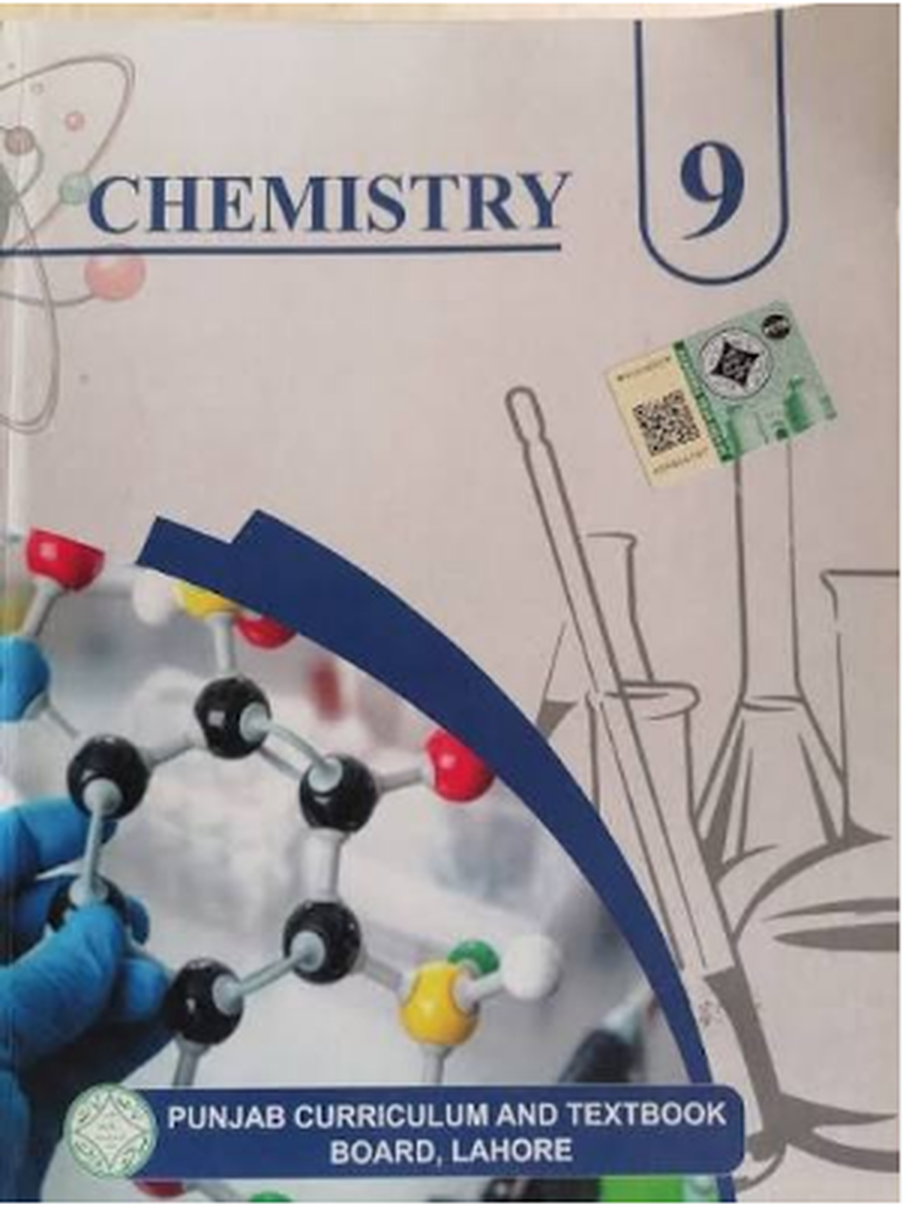
HSA Notes brings short, clear, exam focused notes designed to help Class 9 SSC Part One Matric students score 90 plus marks in Punjab Board exams under the New PECTAA and PCTB syllabus for the 2026 to 2027 session. This page is the complete hub for Class 9 Chemistry, covering MCQs, short answers, constructed response, descriptive, and investigative questions for every chapter as each one is completed.
All Chapters, Class 9 Chemistry, PECTAA New Book
Each chapter’s status will be updated to “Available” here as it is completed, so bookmark this page and check back for updates.
| Chapter No. | Chapter Name | Status |
|---|---|---|
| 1 | States of Matter and Phase Changes | Coming Soon |
| 2 | Atomic Structure | Coming Soon |
| 3 | Chemical Bonding | Coming Soon |
| 4 | Stoichiometry | Coming Soon |
| 5 | Energetics | Coming Soon |
| 6 | Equilibria | Coming Soon |
| 7 | Acid Base Chemistry | Coming Soon |
| 8 | Periodic Table and Periodicity | Coming Soon |
| 9 | Group Properties and Elements | Coming Soon |
| 10 | Environmental Chemistry | Coming Soon |
| 11 | Hydrocarbons | Coming Soon |
| 12 | Empirical Data Collection and Analysis | Coming Soon |
| 13 | Laboratory and Practical Skills | Coming Soon |
Quick Overview Of Units
Unit 1: States of Matter and Phase Changes
This unit explores solids, liquids, and gases and explains their particle arrangement and movement.
It also covers phase changes such as melting, freezing, evaporation, condensation, and sublimation.
Unit 2: Atomic Structure
This unit introduces the structure of atoms, including protons, neutrons, and electrons.
It explains atomic number, mass number, isotopes, and the arrangement of electrons.
Unit 3: Chemical Bonding
This unit explains how atoms combine to form stable molecules and compounds.
It covers ionic, covalent, and other types of chemical bonding and their properties.
Official Youtube Channel : www.youtube.com/@PECTAAlearnersclub
Unit 4: Stoichiometry
This unit focuses on the quantitative relationships between reactants and products in chemical reactions.
It covers moles, molar mass, balanced equations, and calculations involving chemical quantities.
Unit 5: Energetics
This unit studies the energy changes associated with chemical reactions and physical processes.
It explains exothermic and endothermic reactions, energy transfer, and enthalpy changes.
Unit 6: Equilibria
This unit introduces reversible reactions and the concept of dynamic chemical equilibrium.
It explains how changes in concentration, temperature, and pressure affect equilibrium systems.
Unit 7: Acid Base Chemistry
This unit explores the properties and reactions of acids and bases in different chemical systems.
It covers pH, indicators, neutralization, and the relative strength of acids and bases.
Unit 8: Periodic Table and Periodicity
This unit explains how elements are arranged in the periodic table according to their atomic structure.
It explores periodic trends such as atomic size, ionization energy, and electronegativity.
Unit 9: Group Properties and Elements
This unit examines the properties and behavior of elements belonging to different groups of the periodic table.
It compares their physical properties, chemical reactions, trends, and important compounds.
Unit 10: Environmental Chemistry
This unit examines chemical processes that affect the environment, including air, water, and soil.
It discusses pollution, greenhouse gases, climate change, and methods of protecting the environment.
Unit 11: Hydrocarbons
This unit introduces organic compounds made primarily of carbon and hydrogen.
It covers their structures, properties, reactions, classification, and common uses.
Unit 12: Empirical Data Collection and Analysis
This unit develops skills for collecting, recording, analyzing, and interpreting scientific data.
It covers measurements, uncertainties, graphs, calculations, and drawing conclusions from experiments.
Unit 13: Laboratory and Practical Skills
This unit develops essential skills for performing chemical experiments safely and accurately.
It focuses on laboratory equipment, measurements, observations, experimental procedures, and safety practices.
HSA Notes Features
- Chapters fully solved, chapter by chapter.
- MCQs with clear explanations.
- Short, long, and constructed responses covered.
- States of Matter, Atomic Structure, Chemical Bonding, and more on the way.
- Built for the new PECTAA and PCTB syllabus, 2025 to 2026 session.
Available Across All Punjab Boards and Top Schools
These notes are built for students across all Punjab Boards, including Lahore, Gujranwala, Faisalabad, Multan, Rawalpindi, Sargodha, Bahawalpur, DG Khan, and Sahiwal, and are used at top schools including Beaconhouse, Roots International, Lahore Grammar School, Aitchison College, Froebel’s, Army Public School, St Patrick’s, The City School, and Fazaia schools.
What to Expect in Every Chapter
Each chapter page on HSA Notes follows the same exam focused format once it goes live: multiple choice questions with explanations for why each option is correct or incorrect, short answer questions solved in a clear step by step style, constructed response and descriptive questions written out in full, and investigative questions that mirror the reasoning-based style increasingly used in Punjab Board papers. Topics such as plasma and neon signs, isotopes of lead, graphene, and the allotropy of sulphur, which recur across past papers, will be worked through with the same short, memorable explanations HSA Notes is known for.
Why Complete Chapter Coverage Matters for Your Overall Score
Chemistry exams draw questions from across every chapter, and gaps in coverage are often where marks are lost even by well-prepared students. Working through a complete, chapter by chapter set of solved MCQs, short answers, and descriptive questions means no topic is left unpracticed going into the exam, and the consistent format from chapter to chapter makes revision faster as more content is added.
Join Online Classes
Join online classes to aim for 90 plus marks, including past paper practice.
Contact: hsanotes48@gmail.com
Frequently Asked Questions
Which syllabus are these Chemistry notes based on? The new PECTAA and PCTB syllabus for Class 9 Chemistry, 2026 to 2027 session.
Are all chapters available right now? Chapters are being added one at a time and are marked “Coming Soon” until published; check this page for the latest status.
What type of questions are covered in each chapter? MCQs with explanations, short answers, constructed response, descriptive, and investigative questions.
Are these notes suitable for all Punjab Boards? Yes, they are built to align with the PECTAA and PCTB textbook used across all Punjab Boards.
Conclusion
This page will grow into the complete home for Class 9 Chemistry PECTAA notes on HSA Notes, starting with States of Matter and Phase Changes, Atomic Structure, and Chemical Bonding. Check back as each chapter is solved and added, and use these notes alongside regular past paper practice to build the confidence needed for 90 plus marks in your Punjab Board exam.
Best of luck for your Class 9 Chemistry exam!