Introduction
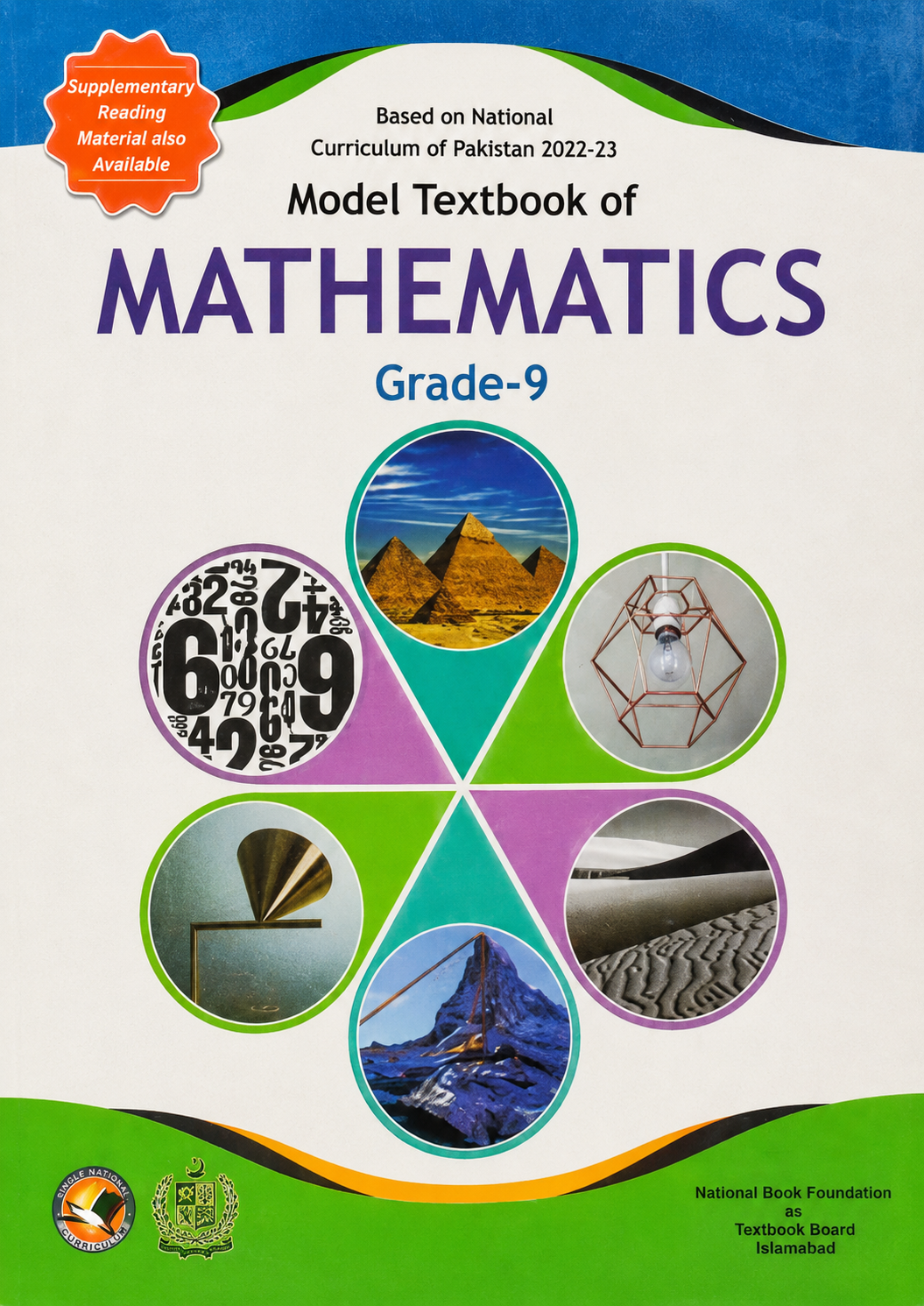
Assalam O Alaikum Dear Students and Respected Teachers Get Unit 5 of the Class 9 Mathematics NBF textbook, Linear Equations and Inequalities, is one of the most practical units in the entire syllabus because it teaches students how to actually solve for an unknown value rather than only defining it. The unit spans Exercise 5.1 through Exercise 5.4, followed by a Miscellaneous Exercise that pulls every idea together in one place.
In this post we walk through what each exercise contains, explain the underlying concepts in plain language, and give you a full picture of the unit before you sit down with the actual textbook questions.
As always, the notes prepared here are based on the real content of the NBF book and are equally useful for students who want to revise quickly and for teachers who are planning lessons or preparing tests. The explanations you will find below have been reviewed by the experienced faculty at HSA Notes, who have taught this unit to hundreds of FBISE students over the years.
Easy Concept Notes
A linear equation in one variable is any equation that can be written as ax + b = 0, where a and b are real numbers and a is not zero. The important rule to remember is that the power of the variable must always be 1. A solution is simply the value of the variable that makes the equation true, and two equations with the same solution are called equivalent equations.
An inequality compares two expressions using symbols such as less than, greater than, less than or equal to, and greater than or equal to. The golden rule that trips up most students is that multiplying or dividing both sides of an inequality by a negative number reverses the direction of the inequality sign.
Topics Covered in Unit
- Linear equations in one variable, including those with fractional and decimal coefficients
- Radical equations and the concept of extraneous roots
- Absolute value equations and their solution sets
- Definition and properties of inequalities such as trichotomy, transitive, additive, and multiplicative properties
- Linear inequalities in one variable
- Compound inequalities joined with the words and or or
Importance of the Unit
This unit forms the backbone of algebra that students will keep using throughout secondary and higher secondary education. Radical equations connect directly to later topics involving square roots and surds, absolute value prepares students for coordinate geometry and later calculus concepts of distance, and inequalities are essential for topics like linear programming and set theory that appear in Class 10 and beyond.
Because FBISE papers regularly draw questions from real life scenarios that translate into equations or inequalities, mastering this unit also builds the skill of converting a word problem into a mathematical statement, which is tested heavily in board exams.
Exercise by Exercise Breakdown
Exercise 5.1 contains thirteen questions that ask students to solve linear equations in one variable. The questions progress from simple equations to ones involving grouping symbols, fractional coefficients that require finding the least common multiple of denominators, and decimal coefficients.
Exercise 5.2 has sixteen questions built entirely around radical equations. Students isolate the square root term, square both sides, solve for the variable, and then verify the result, since several of these questions are designed specifically to produce an extraneous root that must be rejected.
Exercise 5.3 offers fourteen questions on absolute value equations, ranging from a single absolute value expression equal to a number, to equations where absolute value expressions appear on both sides and must be split into two separate linear equations.
Exercise 5.4 presents twelve questions covering linear inequalities, starting with checking whether a given value satisfies an inequality, writing solution sets in set notation, solving straightforward inequalities, and finally solving compound inequalities joined by and or or, plus two word problems that must first be translated into an inequality.
Miscellaneous Exercise 5 Summary
The Miscellaneous Exercise opens with sixteen multiple choice questions that test definitions and quick recall, such as identifying the standard form of a linear equation or picking the correct solution set of an absolute value equation. It then moves into nine longer questions that mix every technique from the unit, including equations with nested fractions, radical equations, absolute value equations, inequalities, and a word problem about the difference between three times a number and a fixed value.
One Sample Solved Question
Solve the equation 0.4(x plus 2) minus 0.2x equal to 1.6. Distributing gives 0.4x plus 0.8 minus 0.2x equal to 1.6. Combining like terms gives 0.2x plus 0.8 equal to 1.6. Subtracting 0.8 from both sides gives 0.2x equal to 0.8. Dividing both sides by 0.2 gives x equal to 4. Checking the answer by substituting x equal to 4 back into the original equation confirms both sides equal 1.6, so x equal to 4 is the required root.
For Teachers
These notes can be used directly for lesson planning since they are organized in the exact order of the textbook exercises, which makes it easy to assign homework, plan quizzes, and pace classroom coverage across a week or two. Teachers can also lean on the miscellaneous exercise summary to design a quick review session before an internal test.
Class 9 Unit Notes
- Complete concept explanations for equations, radicals, absolute value, and inequalities
- Step by step solved examples for every sub topic
- Full solutions to Exercise 5.1, 5.2, 5.3, and 5.4
- Solved Miscellaneous Exercise including all multiple choice questions
- Key points summary for quick revision
Class 9 Unit MCQs
A dedicated set of multiple choice questions covering every definition and rule in the unit, including standard forms, properties of equality, absolute value solution sets, and inequality properties, is available for practice and self assessment.
Short and Long Questions
Short questions focus on definitions, checking whether a value satisfies an equation or inequality, and quick one step solutions. Long questions require full working for radical equations, absolute value equations, and compound inequalities, matching the style expected in FBISE board papers.
Sample Papers And Notes
Complete PDF notes for Unit 5, along with FBISE style sample papers and previous years past papers relevant to this unit, are available from HSA Notes. Visit hsanotes.com to get your free copy today.
Online Classes
HSA Notes, in collaboration with Hamdard Science Academy, also offers guided online classes for Class 9 Mathematics, where this unit is explained live with additional practice questions and doubt clearing sessions.
Have a Query?
If you have any question about this unit or need help with a specific problem, reach out to us at hsanotes48@gmail.com and our team will get back to you.
Frequently Asked Questions
What is the standard form of a linear equation in one variable? It is ax plus b equal to zero, where a and b are real numbers and a is not equal to zero.
Why do radical equations sometimes have no solution? Squaring both sides can produce a value that does not satisfy the original equation, called an extraneous root, and sometimes every candidate value turns out to be extraneous, leaving no solution.
What happens to an inequality sign when multiplying by a negative number? The direction of the inequality symbol reverses, so less than becomes greater than and vice versa.
Is this unit important for the FBISE board exam? Yes, questions from linear equations, radical equations, absolute value, and inequalities appear regularly in both objective and subjective sections of the paper.
Conclusion
Unit 5 gives Class 9 students the tools to solve four different types of problems using one consistent style of algebraic thinking. With steady practice across all four exercises and the miscellaneous exercise, students can walk into their exam confident about this portion of the paper. Get PDF notes from HSA Notes and reach out with any questions along the way.