Introduction
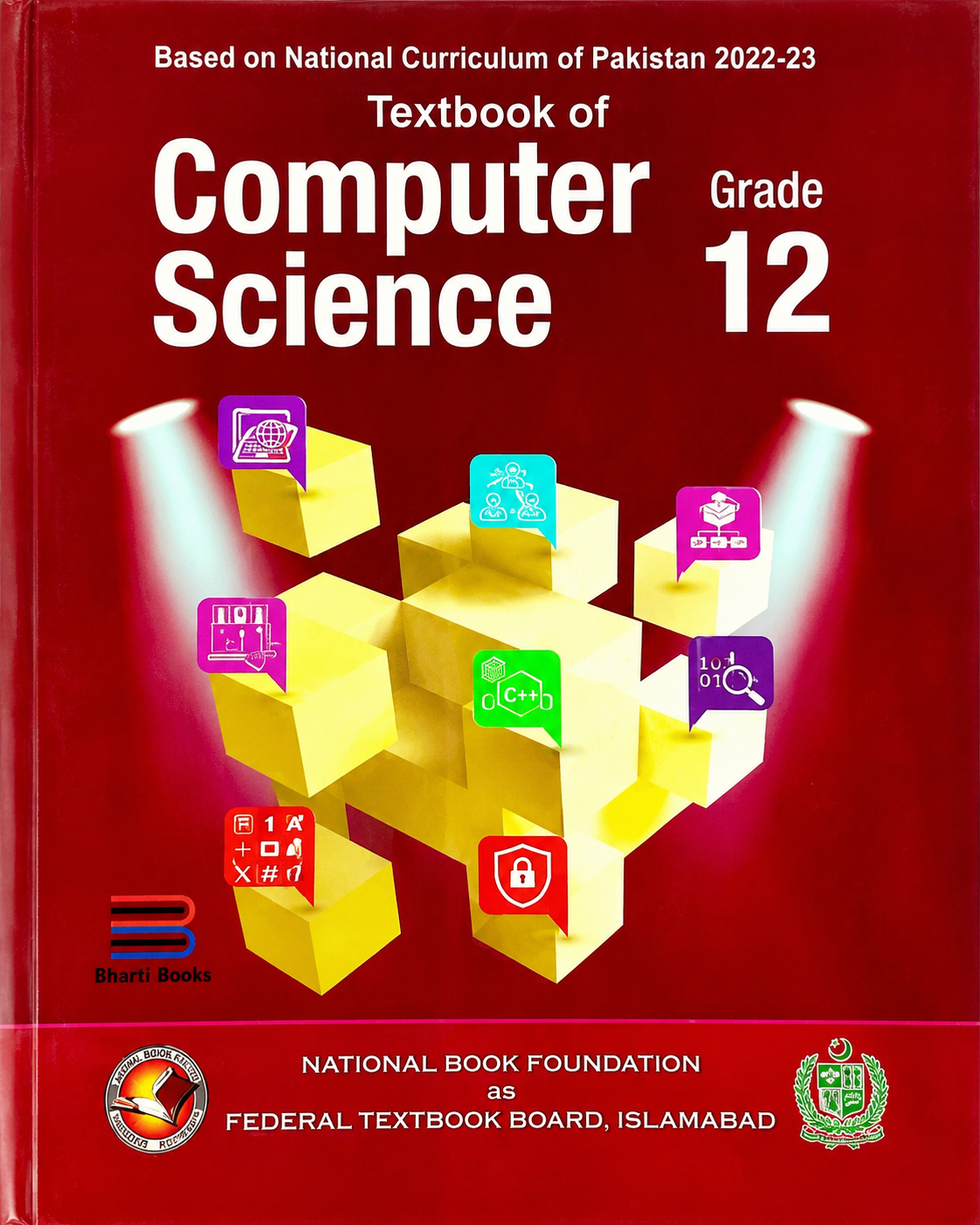
The Class 12 Computer Science syllabus is based on the latest curriculum of the National Book Foundation (NBF) and follows the examination structure of the Federal Board of Intermediate and Secondary Education (FBISE). In particular, this subject is designed to develop students’ understanding of computing systems, programming logic, data handling, problem-solving, and modern digital technologies.
Class 12 Computer Science Units
The Class 12 Computer Science New Book:
| Unit | Unit Name | Status |
|---|---|---|
| 1 | Computer Systems | Coming Soon |
| 2 | Computational Thinking & Algorithms | Coming Soon |
| 3 | Programming Fundamentals | Coming Soon |
| 4 | Data and Analysis | Coming Soon |
| 5 | Applications of Computer Science | Coming Soon |
| 6 | Impacts of Computing | Coming Soon |
| 7 | Digital Literacy | Coming Soon |
| 8 | Entrepreneurship in Digital Age | Coming Soon |
Therefore, HSA Notes provides Class 12 Computer Science study material in a simple and organized format. As a result, students can understand important concepts more easily, revise key topics, and prepare for FBISE examinations with greater confidence.
Computer Science
Computer Science is a modern and rapidly developing field that focuses on computers, programming, algorithms, data processing, software, and digital systems. At the Class 12 level, the subject combines theoretical concepts with practical applications and logical problem-solving.
Furthermore, students learn how computer systems operate, how software is developed, and how information can be collected, processed, and analyzed. In addition, the subject introduces important areas such as algorithms, programming fundamentals, data analysis, digital literacy, cybersecurity, and the social impact of computing.
Unit 1: Computer Systems
First, this unit introduces the basic structure and working of a computer system. A computer system is an electronic system that receives data, processes it according to instructions, and produces useful information.
Key Topics
- Input, Process, Output (IPO cycle)
- Central Processing Unit (CPU)
- Memory types
- RAM, ROM, and cache memory
- Secondary storage devices
- System software
- Application software
Conceptual Understanding
In particular, the CPU performs calculations and controls many operations of the computer. Meanwhile, memory stores data and instructions either temporarily or permanently, depending on its type.
Therefore, understanding the relationship between hardware and software is essential for studying more advanced computing concepts.
Unit 2: Computational Thinking & Algorithms
Next, this unit focuses on systematic problem-solving through computational thinking and algorithms.
Key Topics
- Decomposition
- Pattern recognition
- Abstraction
- Algorithms
- Flowcharts
- Pseudocode
Conceptual Understanding
Generally, computational thinking allows a complex problem to be divided into smaller and more manageable parts. Similarly, pattern recognition helps identify similarities that can make problem-solving more efficient.
Furthermore, an algorithm provides a logical sequence of instructions for solving a problem, while flowcharts and pseudocode help represent those instructions before actual programming begins.
Unit 3: Programming Fundamentals
After learning algorithms, students move toward programming fundamentals. Programming involves writing instructions that a computer can execute to perform a specific task.
Key Topics
- Variables
- Data types
- Arithmetic operators
- Relational operators
- Logical operators
- Conditional statements
- Loops
- Arrays
- Functions
- Debugging and error handling
Conceptual Understanding
Importantly, programming requires both logical thinking and attention to detail. For example, an incorrect condition or syntax error can produce an unexpected result. Therefore, regular coding practice is essential for developing programming skills.
Unit 4: Data and Analysis
In addition, this unit introduces students to the collection, organization, processing, and analysis of data.
Key Topics
- Qualitative and quantitative data
- Data collection
- Tables
- Graphs
- Mean
- Median
- Mode
- Basic statistical analysis
Conceptual Understanding
Essentially, data consists of raw facts and figures. After processing, these data can provide meaningful information that supports analysis and decision-making.
Unit 5: Applications of Computer Science
Furthermore, this unit demonstrates how Computer Science is applied in different areas of modern life.
Key Topics
- Software applications
- Database systems
- Web development
- Artificial intelligence
- Mobile applications
- Digital services
Conceptual Understanding
Today, Computer Science is used in almost every major sector. For instance, online banking, educational platforms, mobile applications, websites, and digital communication systems all rely on computing technologies.
Unit 6: Impacts of Computing
Along with its benefits, computing also creates social, ethical, and security-related challenges. This unit examines the effects of technology on individuals and society.
Key Topics
- Social impact of technology
- Ethics in computing
- Cybersecurity
- Data protection
- Privacy
- Digital transformation
Conceptual Understanding
On the one hand, technology improves communication, education, business, and access to information. On the other hand, issues such as unauthorized access, data misuse, privacy violations, and cyber threats require responsible use of digital systems.
Unit 7: Digital Literacy
Similarly, digital literacy focuses on the effective, responsible, and safe use of digital technologies.
Key Topics
- Internet browsing
- Email communication
- Online safety
- Information verification
- Fake news awareness
- Digital citizenship
Conceptual Understanding
In today’s digital environment, students encounter large amounts of information online. Therefore, they should learn how to evaluate sources, verify information, protect personal data, and recognize potential online threats.
Unit 8: Entrepreneurship in Digital Age
Finally, this unit introduces students to opportunities created by digital technology and online business.
Key Topics
- E-commerce
- Digital marketing
- Freelancing
- Startup ideas
- Online payment systems
- Digital business models
Conceptual Understanding
In recent years, digital platforms have created new ways to provide services, sell products, and develop online businesses. For example, e-commerce stores, freelancing platforms, digital marketing services, and online content businesses demonstrate how technology can support entrepreneurship.
Importance of Computer Science
Computer Science is important because it:
- Develops logical and analytical thinking
- Improves problem-solving skills
- Builds programming knowledge
- Introduces modern digital technologies
- Supports software and application development
- Provides a foundation for IT-related fields
- Encourages computational thinking
Furthermore, these skills can be useful in higher education and professional areas involving computing and technology.
HSA Notes Preparation Support
In addition to unit-wise study material, HSA Notes provides educational resources designed to support Class 12 students in their examination preparation.
These resources may include:
- Detailed unit-wise notes
- Programming examples
- MCQs practice
- Short questions
- Long questions
- Important concepts
- Sample papers
- Guess papers
- PDF revision notes
Contact HSA Notes
For Class 12 Computer Science notes, sample papers, PDF study material, and educational resources, students can contact HSA Notes.
Email: hsanotes48@gmail.com
Conclusion
In conclusion, Class 12 Computer Science introduces students to important areas including computer systems, computational thinking, algorithms, programming, data analysis, digital applications, cybersecurity, digital literacy, and entrepreneurship. Moreover, these topics combine theoretical knowledge with practical problem-solving and real-world applications.