
Introduction
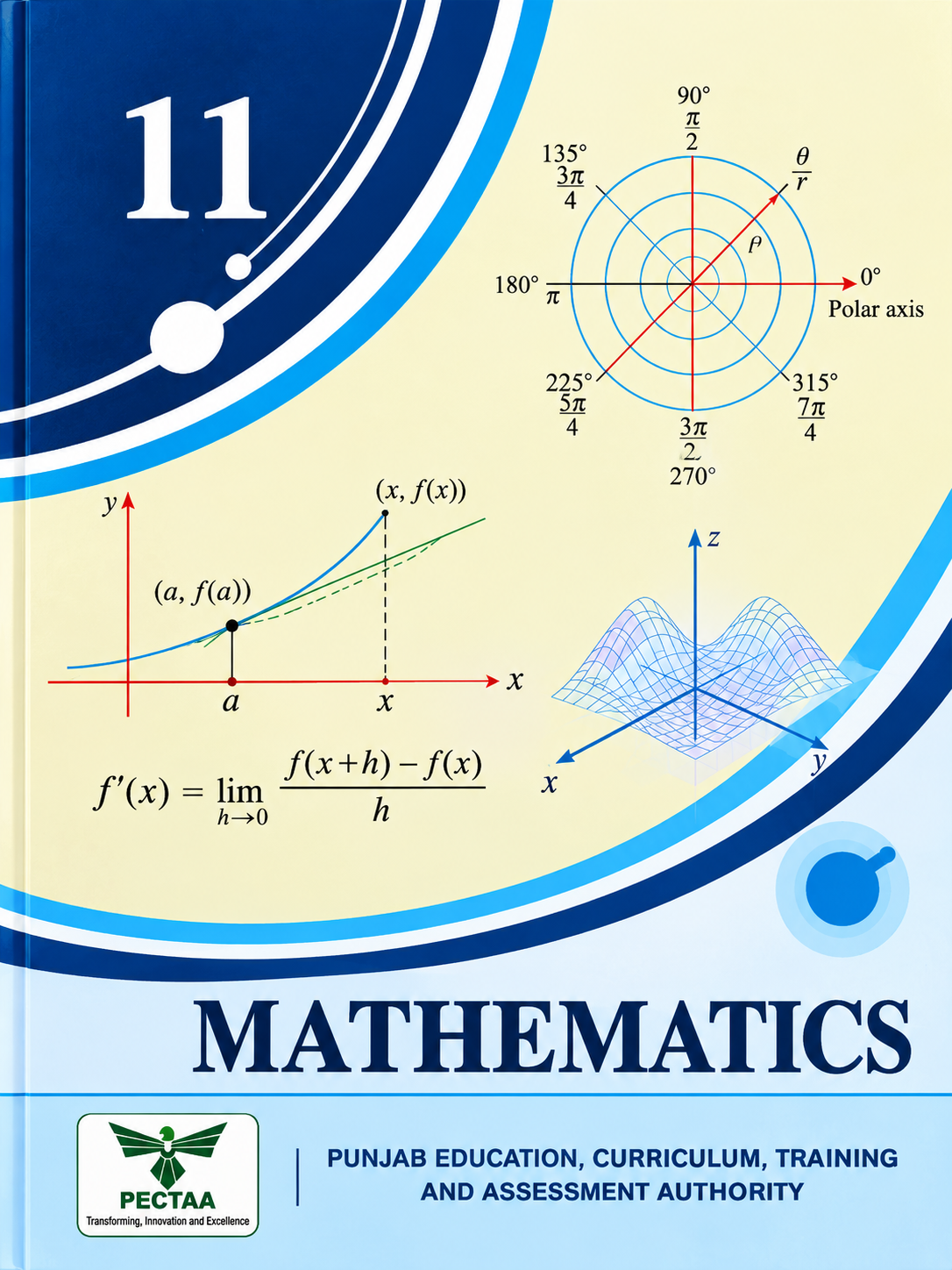
The best Unit 3, Theory of Quadratic Functions, solved notes for Class 11 Punjab Boards are now available, with 100 percent of exercises solved using easy, step by step solutions, graphs, and the marking scheme, based on the new book from PECTAA, the Punjab Curriculum. These notes are perfect for the 2027 exams and are built to help students score 90 plus marks.
🎓 Online Classes with Experienced Experts
Ideal for Students, Teachers, and Lecturers Across All Nine Punjab Boards
These notes are used at top registered institutions across all nine Punjab boards, including Aitchison College Lahore, Sadiq Public School Bahawalpur, Army Public Schools and Colleges, Beaconhouse, Forman Christian College Lahore, Government College University Faisalabad, Cadet College Hasan Abdal, Cadet College Petaro, Cadet College Okara, Cadet College Kohat, Cadet College Sargodha, Cadet College Jhang, Cadet College Pasrur, Cadet College Spinkai, Military College Jhelum, Garrison Cadet College Kohat, and many more.
What’s Inside Unit 3, From Sketching Parabolas to Solving Real Problems
This unit builds directly on the function and graph skills from Unit 2 and takes them a step further into the algebra of quadratics.
Section 3.1, Quadratic Function, opens with the standard form f(x) = ax² + bx + c and shows how the sign of a decides whether the parabola opens upward or downward. From there it covers how to sketch and analyze a quadratic by finding its intercepts and vertex, and how to find the maximum or minimum value by completing the square, a technique that comes up again and again throughout the rest of the unit.
Section 3.2, Inverse of Quadratic Function, deals with a subtlety students often miss: a quadratic isn’t one-to-one over its whole domain, so before you can find its inverse you have to restrict the domain to one side of the vertex. The worked example shows exactly how to do this and how to check which branch of the resulting inverse is the correct one.
Section 3.3, Absolute Value, covers absolute value quadratic equations and inequalities, including how to check for extraneous solutions and how to use critical points and test regions to solve inequalities like |x² − 6x − 4| < 3.
Section 3.4, Equations Reducible to the Quadratic Equation, shows how rational equations and radical equations, which don’t look like quadratics at first glance, can be reduced down to one and solved the same way, with careful attention paid to spotting and discarding extraneous roots.
Section 3.5, Real World Problems, applies everything from the unit to practical situations, like finding the dimensions of a room from its area, or working out the production range where a company’s profit stays above a given threshold.
Official Youtube Channel : www.youtube.com/@PECTAAlearnersclub
Exercise 3.1, Completing the Square (All Questions Solved)
All questions in Exercise 3.1 are fully solved, covering maximum and minimum values by completing the square, sketching quadratic functions to find their domain and range, and finding the inverse of a quadratic function.
| Question | Function | Vertex Form | Result |
|---|---|---|---|
| Q1(i) | f(x) = x² + 6x + 13 | (x + 3)² + 4 | Minimum 4 at x = −3 |
| Q1(ii) | f(x) = x² + 4x | (x + 2)² − 4 | Minimum −4 at x = −2 |
| Q1(iii) | f(x) = −x² + 8x + 13 | −(x − 4)² + 29 | Maximum 29 at x = 4 |
| Q1(iv) | f(x) = −x² − 3x − 5 | −(x + 3/2)² − 11/4 | Maximum −11/4 at x = −3/2 |
| Q1(v) | f(x) = 3x² + 6x − 13 | 3(x + 1)² − 16 | Minimum −16 at x = −1 |
| Q1(vi) | f(x) = −2x² − x + 21 | −2(x + 1/4)² + 169/8 | Maximum 169/8 at x = −1/4 |
The full solved PDF for Exercise 3.1 is available, covering every question and part in complete detail.
Exercise 3.2, Reducible Equations and Real World Problems, Fully Solved
Exercise 3.2 brings together rational and radical equations reducible to quadratics, alongside real world word problems, all fully solved:
- Rational and radical equations, including checking for and discarding extraneous roots.
- Classic word problems, like finding a room’s length and breadth from its area, or a farmer’s sheep purchase from a fixed budget.
- Applied quadratic inequalities, such as finding the safe speed range from a car’s braking distance function, and the time interval during which a rocket stays above a given height.
Bonus Resources
- A Quadratic Functions formula sheet PDF for quick reference.
- The top 30 completing the square shortcuts for faster problem solving.
- Quadratic Functions video lectures.
- Unit 4 is coming soon as the next unit in this series.
View the Full Solved PDF
The complete solved PDF for Unit 3 is available to view for free.
Why This Unit Matters for Your Overall Score
Theory of Quadratic Functions is one of the most heavily tested units in the Class 11 Mathematics syllabus, and completing the square from Section 3.1 is a skill that resurfaces throughout Sections 3.2 to 3.5, from restricting a domain to find an inverse, to solving absolute value inequalities, to modeling real world profit and safety constraints. Students who master completing the square early tend to move through the rest of this unit, and the units that build on it later, much faster.
Join HSA Notes Online Classes
Join HSA Notes’ online classes for full guidance through Unit 3 and every other unit of the Class 11 Mathematics syllabus.
Contact: hsanotes48@gmail.com
Frequently Asked Questions
Which exercises are covered in these Unit 3 notes? Exercise 3.1 and Exercise 3.2 are both covered in full, with complete step by step solutions, alongside every worked example from Sections 3.1 through 3.5.
How do I find the maximum or minimum value of a quadratic function? Rewrite the function in vertex form f(x) = a(x − h)² + k by completing the square. If a is greater than 0, the minimum value is k at x = h. If a is less than 0, the maximum value is k at x = h, as shown in the Exercise 3.1 table above.
Are past papers included with these notes? Yes, Unit 3 past papers solved from 2018 through 2025 are included as a bonus resource.
Do I need to download the PDF to view these notes? No, the full solved PDF can be viewed directly on the site for free, with no download required.
Conclusion
With Exercise 3.1 and Exercise 3.2 fully solved, alongside every worked example across Sections 3.1 to 3.5, Class 11 students across all nine Punjab boards have a complete, exam ready resource for mastering the Theory of Quadratic Functions ahead of the 2026 exams. Use these notes alongside the bonus formula sheet, shortcuts, and past papers to build both speed and accuracy for your Mathematics exam.
Best of luck for your Class 11 Mathematics exam!