
Introduction
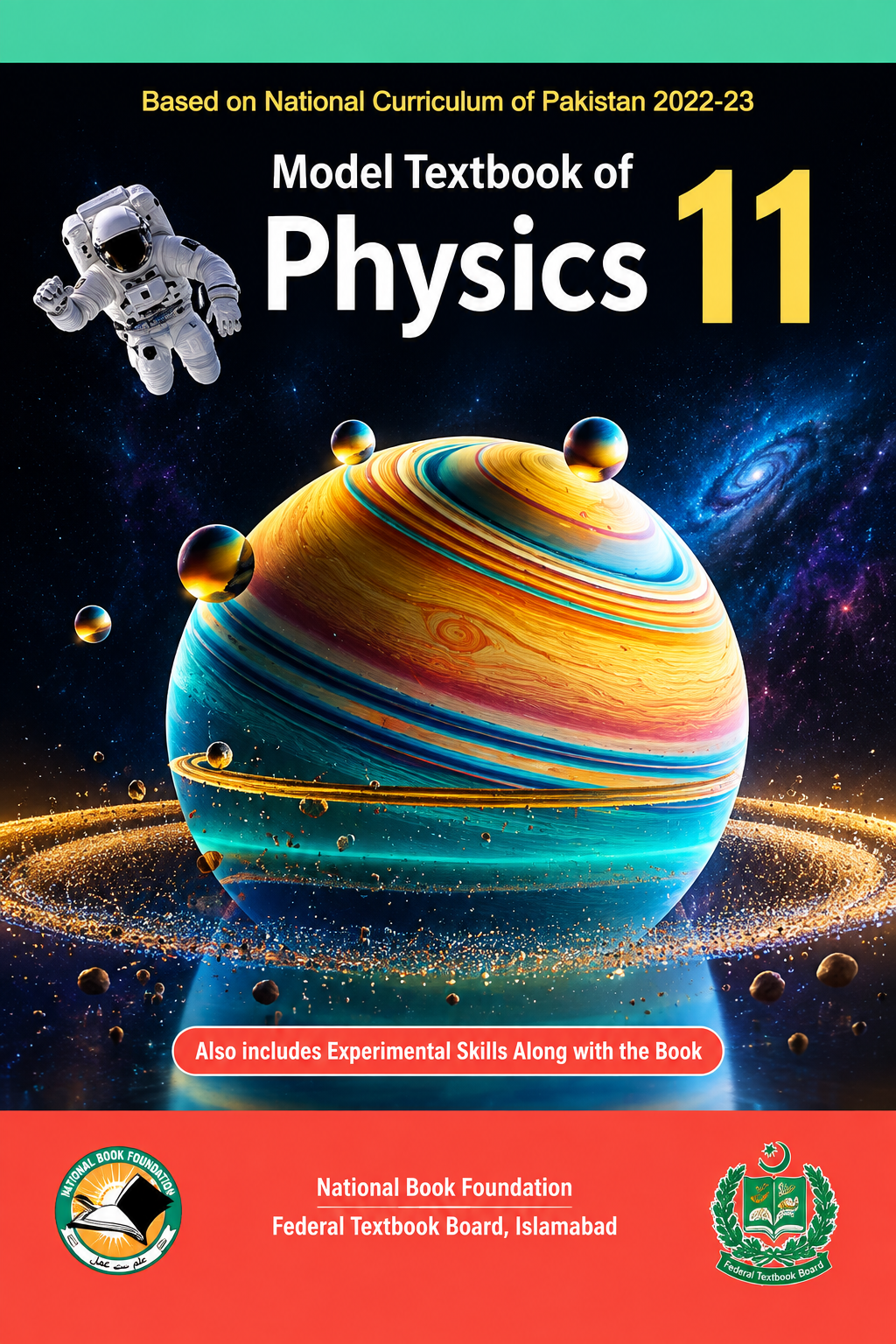
As a result, HSA Notes delivers exam-focused solved notes to support Class 11 (1st Year, HSSC-I) students in FBISE Physics.
This page covers Unit 9, Waves, prepared strictly according to the FBISE New Book/Course syllabus for the current academic session, focusing on wave intensity, energy transfer, and the relationship between intensity and amplitude, along with fully solved short and long responses, numericals, and assignments from HSA Notes.
Intensity of Waves
Definition: The intensity of a wave is defined as the average rate at which energy is transferred per unit area, measured perpendicular to the direction of wave propagation.
Explanation: As a wave travels outward from its source, it carries energy with it. Since this energy spreads out over an increasingly larger area as the wave moves further from the source, the intensity of the wave decreases with increasing distance, even though the total energy carried by the wave remains the same.
Derivations:
Intensity is defined in terms of power and area as:
I = P/A
where P is the power, meaning the rate of energy transfer, and A is the cross-sectional area through which the wave passes.
Intensity is also directly proportional to the square of the amplitude of the wave:
I ∝ A²
This relationship arises because the energy carried by a wave is proportional to the square of its amplitude, and since intensity is simply energy transfer rate per unit area, this proportionality carries through directly. This formula is central to nearly every numerical in this unit, particularly those comparing the intensities of two waves with different amplitudes.
Exercises Solved
This session’s Unit 9 exercise solutions from HSA Notes cover every question type set by FBISE, with full working shown for each answer.
Solved MCQs
(Not included in this unit’s source material; full MCQ practice for Waves is available in the complete notes.)
Short Responses
9.1 Does constructive interference double the intensity of a wave?
No. When two identical waves interfere constructively, the resultant amplitude becomes 2A rather than A, but since intensity is proportional to the square of amplitude, the intensity increases by a factor of four, not simply doubling.
Long Responses
9.1 Explain the principle of superposition.
The principle of superposition states that when two or more waves overlap at a point, the resultant displacement at that point is equal to the vector sum of the individual displacements each wave would have produced on its own. This principle explains phenomena such as constructive and destructive interference and forms the basis for understanding how combined waves behave.
Numericals
9.1 A wave has an intensity of 1.50 × 10² W/m² passing through an area measuring 3 cm by 5 cm. Using I = P/A, the power carried by the wave through this area can be calculated by first converting the area into square metres and then multiplying by the given intensity.
Assignments
Assignment 9.1 Using the relationship I ∝ A², determine how the intensity of a wave changes when its amplitude is altered by a given factor, applying the squared proportionality directly to compare the two intensities.
HSA Notes Features
- Short and long-response questions with clear, detailed answers
- Solved numericals with full working and correct units
- Solved assignments matching the current session’s syllabus
- Solved textbook exercises covering every question
- Full Waves notes for Class 11, based on the FBISE new book/course, available in PDF form at hsanotes.com
Why This Unit Matters
The concept of wave intensity connects directly to real-world applications such as sound loudness, light brightness, and even radio signal strength, all of which depend on the same I ∝ A² relationship covered here.
Available Across All FBISE Institutions
These notes are built for students across all FBISE-affiliated schools and colleges, including Islamabad Model Colleges, F.G. Colleges, Army Public Schools & Colleges, Punjab Colleges, Dr. A.Q. Khan Colleges, Fazaia Inter Colleges, IMCB, IMCG, and Sir Syed Colleges.
Join Online Classes
Join HSA Notes online classes to strengthen your concepts in Waves and every other unit of Class 11 Physics, with regular past paper practice to help you aim for 90 plus marks in your FBISE board exam this session.
Contact: hsanotes48@gmail.com
Frequently Asked Questions
What is the intensity of a wave?
Intensity is the average rate at which energy is transferred by a wave per unit area, measured perpendicular to the direction of propagation, given by I = P/A.
How is intensity related to amplitude?
Intensity is directly proportional to the square of the amplitude, I ∝ A², meaning that doubling the amplitude of a wave increases its intensity by a factor of four.
Does constructive interference double a wave’s intensity?
No, constructive interference doubles the amplitude, but since intensity depends on the square of amplitude, the intensity actually increases by a factor of four.
What does the principle of superposition state?
It states that the resultant displacement at any point where two or more waves overlap is equal to the vector sum of the individual displacements each wave would produce alone.
Conclusion
With Unit 9, Waves, fully covered, Class 11 FBISE students now have a clear understanding of wave intensity, its relationship to amplitude, and the principle of superposition, along with fully solved short and long responses, numericals, and assignments for this session. Practice these solved exercises alongside past papers, and consider joining our online classes for guided, exam-focused preparation, to build the accuracy and confidence needed for your board exam.
Best of luck for your Class 11 Physics exam!