
Introduction
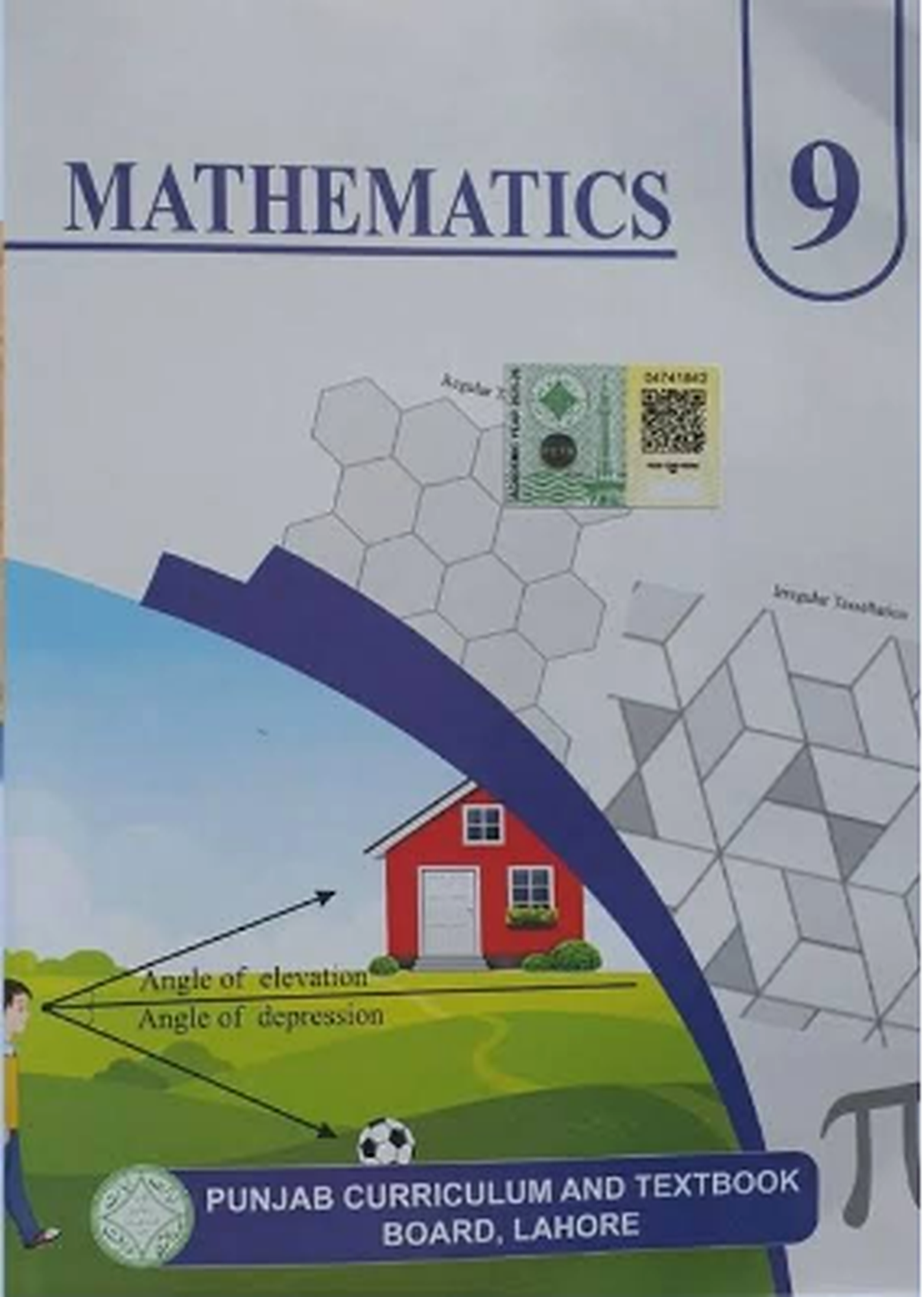
HSA Notes brings short, clear, exam focused notes designed to help Class 9 SSC Part One Matric students score 90 plus marks in Punjab Board exams under the New Book 2026 to 2027 session.
This page covers Unit 6, Trigonometry, from Exercise 6.1, including identifying quadrants, finding co-terminal angles, and converting between decimal degrees and degrees, minutes, and seconds.
🎓 Online Classes with Experienced Experts
HSA Notes Features
- Short, easy to remember definitions.
- Step by step solutions for every question.
- Tricks and memory aids for faster revision.
- Exact alignment with the PCTB and PECTAA textbook.
- Angles and quadrants simplified into a clear, repeatable method.
- Past paper pattern questions included throughout.
- A fast revision format built for last minute review.
- Trusted by Punjab students.
Available Across All Punjab Boards and Top Schools
These notes are built for students across all Punjab Boards, including Lahore, Gujranwala, Rawalpindi, Faisalabad, Bahawalpur, Multan, Sargodha, Sahiwal, and DG Khan, and are used at top schools including The City School, Beaconhouse, Roots International, Lahore Grammar School, Karachi Grammar School, Froebel’s, The Educators, Army Public School, Divisional Public School, and Government Model School.
Exercise 6.1, Q1, Quadrants and Co-terminal Angles
| No. | Angle | Quadrant | Co-terminal Angle |
|---|---|---|---|
| i | 65 degrees | Quadrant I | 425 degrees |
| ii | 135 degrees | Quadrant II | 495 degrees |
| iii | negative 40 degrees | Quadrant IV | 320 degrees |
| iv | 210 degrees | Quadrant III | negative 150 degrees |
| v | negative 150 degrees | Quadrant III | 210 degrees |
Notice that items (iv) and (v) form a matching pair, since 210 degrees and negative 150 degrees are co-terminal angles of each other, both landing in Quadrant III.
Exercise 6.1, Q2, Converting Decimal Degrees to DMS
| No. | Decimal Degrees | Degrees, Minutes, Seconds |
|---|---|---|
| i | 123.456 degrees | 123 degrees, 27 minutes, 22 seconds |
| ii | 58.7891 degrees | 58 degrees, 47 minutes, 21 seconds |
| iii | 90.5678 degrees | 90 degrees, 34 minutes, 4 seconds |
Exercise 6.1, Q3, Converting DMS to Decimal Degrees
This conversion works in the opposite direction, using the formula decimal degrees equals degrees, plus minutes divided by 60, plus seconds divided by 3600. The full step by step calculations for every part of Q3 are included in the downloadable PDF.
How to Convert Between Decimal Degrees and DMS
To convert from decimal degrees to degrees, minutes, and seconds, as in Q2, keep the whole number as the degrees. Multiply the remaining decimal portion by 60 to get the minutes, keep the whole number of that result as the minutes, and multiply whatever decimal remains by 60 again to get the seconds, rounding to the nearest whole second.
For example, with 123.456 degrees, the whole number 123 becomes the degrees. The decimal 0.456 multiplied by 60 gives 27.36, so 27 becomes the minutes, and the remaining 0.36 multiplied by 60 gives approximately 22, which becomes the seconds, producing 123 degrees, 27 minutes, 22 seconds.
To convert from degrees, minutes, and seconds back to decimal degrees, as in Q3, use the formula shown above, dividing the minutes by 60 and the seconds by 3600, then adding both results to the whole degree value.
Why This Unit Matters for Your Overall Score
Trigonometry begins with these foundational skills, identifying which quadrant an angle falls into and converting between decimal degrees and degrees, minutes, and seconds, because both concepts appear repeatedly throughout the rest of the unit.
Knowing the quadrant an angle falls into is essential for later work determining the sign of trigonometric ratios, while comfort converting between angle formats prevents small errors from creeping into more advanced calculations later on.
Join Online Classes
Join online classes to aim for 90 plus marks, including past paper practice.
Contact: hsanotes48@gmail.com
Frequently Asked Questions
How do I find a co-terminal angle? Add or subtract 360 degrees from the given angle. Both the original angle and the result will point in the same direction and are considered co-terminal.
How do I know which quadrant an angle belongs to? Angles between 0 and 90 degrees fall in Quadrant I, between 90 and 180 degrees in Quadrant II, between 180 and 270 degrees in Quadrant III, and between 270 and 360 degrees in Quadrant IV. For negative angles, first find the equivalent positive angle by adding 360 degrees.
What is the formula for converting DMS to decimal degrees? Decimal degrees equals the degree value, plus the minutes divided by 60, plus the seconds divided by 3600.
Are these notes aligned with the PCTB and PECTAA textbook? Yes, these notes are built to exactly match the PCTB and PECTAA New Book for Class 9 Mathematics for the 2025 to 2026 session.
Conclusion
With Exercise 6.1 fully solved, covering quadrants, co-terminal angles, and conversions between decimal degrees and DMS, Class 9 students have a strong foundation for Unit 6, Trigonometry. Use these notes alongside regular practice with past papers to build the confidence needed for 90 plus marks in your Punjab Board exam.
Best of luck for your Class 9 Mathematics exam!