
Introduction
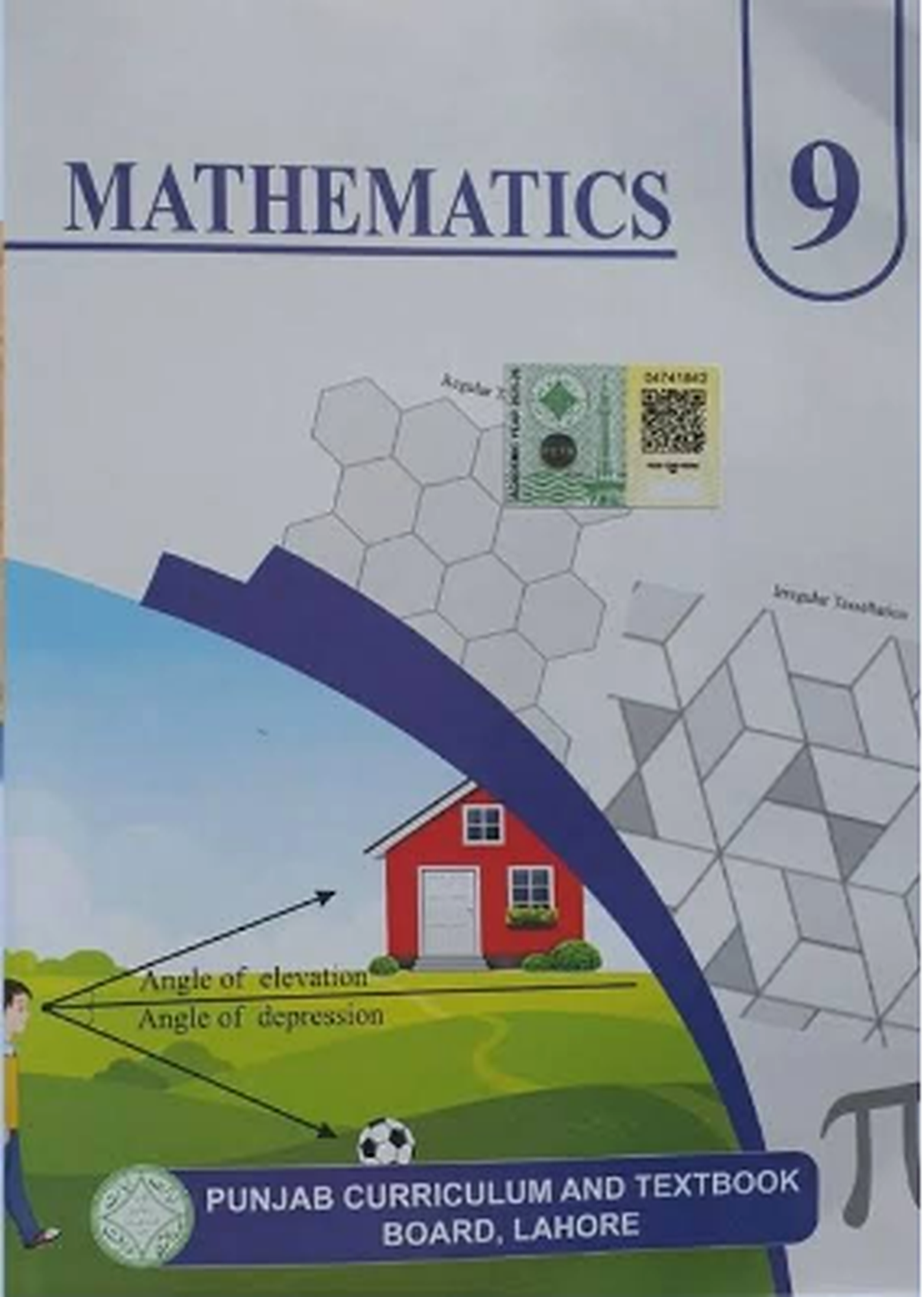
HSA Notes brings short, clear, exam focused notes designed to help Class 9 SSC Part One students score 90 plus marks in Punjab Board exams. This page covers Unit 3, Sets, from Exercise 3.1, including set builder notation, tabular form, proper subsets, and set comparisons.
🎓 Online Classes with Experienced Experts
HSA Notes Features
- Short, easy to remember definitions.
- Step by step solutions for every question.
- Tricks and memory aids for faster revision.
- Exact alignment with the PCTB and PECTAA textbook.
- Set notations simplified into a clear, repeatable method.
- Past paper pattern questions included throughout.
- A fast revision format built for last minute review.
- Trusted by Punjab students.
Available Across All Punjab Boards and Top Schools
These notes are built for students across all Punjab Boards, including Lahore, Gujranwala, Rawalpindi, Faisalabad, Bahawalpur, Multan, Sargodha, Sahiwal, and DG Khan, and are used at top schools including The City School, Beaconhouse, Roots International, Lahore Grammar School, Karachi Grammar School, Froebel’s, The Educators, Army Public School, Divisional Public School, and Government Model School.
Exercise 3.1, Q1, Set Builder Notation
| No. | Set in Tabular Form | Set Builder Notation |
|---|---|---|
| i | 1, 4, 9, up to 484 | x equals n squared, where n belongs to the natural numbers, 1 is less than or equal to n, which is less than or equal to 22 |
| ii | 2, 4, 8, up to 256 | x equals 2 to the power n, where n belongs to the natural numbers, 1 is less than or equal to n, which is less than or equal to 8 |
| iii | 0, plus or minus 1, up to plus or minus 1000 | x belongs to the integers, negative 1000 is less than or equal to x, which is less than or equal to 1000 |
| iv | 6, 12, 18, up to 120 | x equals 6n, where n belongs to the natural numbers, 1 is less than or equal to n, which is less than or equal to 20 |
| v | 100, 102, 104, up to 400 | x is even, and 100 is less than or equal to x, which is less than or equal to 400 |
| vi | 1, 3, 9, 27, 81, and so on | x equals 3 to the power n, where n belongs to the whole numbers |
| vii | 1, 2, 4, 5, 10, 20, 25, 50, 100 | x divides 100, where x belongs to the natural numbers |
| viii | 5, 10, 15, up to 100 | x equals 5n, where n belongs to the natural numbers, 1 is less than or equal to n, which is less than or equal to 20 |
| ix | Integers between 100 and 1000 | x belongs to the integers, 100 is less than x, which is less than 1000 |
Exercise 3.1, Q2, Tabular Form
| No. | Description | Set in Tabular Form |
|---|---|---|
| i | Multiples of 3 up to 36 | 3, 6, 9, up to 36 |
| ii | 2x plus 1 equals 0 | negative one half |
| iii | Prime numbers less than 12 | 2, 3, 5, 7, 11 |
| iv | Divisors of 128 | 1, 2, 4, 8, 16, 32, 64, 128 |
| v | x equals 2 to the power n, n less than 8 | 2, 4, 8, 16, 32, 64, 128 |
| vi | x plus 4 equals 0, x belongs to natural numbers | empty set |
| vii | x equals x, x belongs to natural numbers | the set of natural numbers |
| viii | 3x plus 1 equals 0, x belongs to integers | empty set |
A note on item (v) above: the resulting set, 2, 4, 8, 16, 32, 64, 128, is a set of powers of 2, which matches a rule of x equals 2 to the power n rather than x equals 2 times n. If your source material shows this as x equals 2n, it is likely a small transcription slip, since 2 times n for n less than 8 would instead produce the set 2, 4, 6, 8, 10, 12, 14.
Exercise 3.1, Q3, Examples of Proper Subsets
| No. | Set | Example Proper Subsets |
|---|---|---|
| i | a, b, c | a, b, and a |
| ii | 0, 1 | 0, and 1 |
| iii | Natural numbers | 1, 2, and so on, and the whole numbers |
| iv | Integers | Natural numbers, and the negative integers |
| v | Rational numbers | Integers, and the set containing just 0 |
| vi | Real numbers | Rational numbers, and integers |
| vii | Rational numbers between 0 and 2 | Rational numbers with 0 less than x, which is less than or equal to 1, and the set 1, one half, one third |
Q4, Set With No Proper Subset
The empty set is the set with no proper subset, since its only subset is itself.
Q5, Comparing Two Similar Looking Sets
The set a, b contains two elements, a and b. The set containing a, b as a single item, written as a set within a set, contains only one element, which is the set a, b itself.
View the full PDF for complete working and additional examples for every part above.
Why This Exercise Matters
Unit 3 introduces the language and notation used to describe sets precisely, and getting comfortable converting between tabular form and set builder notation early on makes every later topic involving sets, including subsets and set operations, much easier to follow.
The distinction highlighted in Q5, between a set containing two elements and a set containing one element that happens to be another set, is a common source of confusion, so it is worth revisiting this example carefully until the difference feels intuitive.
Join Online Classes
Join online classes to aim for 90 plus marks, including past paper practice.
Contact: hsanotes48@gmail.com
Frequently Asked Questions
What is the difference between tabular form and set builder notation? Tabular form lists the elements of a set directly, while set builder notation describes a rule or property that every element of the set must satisfy.
Why is the empty set the only set with no proper subset? A proper subset must contain fewer elements than the original set. Since the empty set has no elements at all, its only possible subset is itself, which is not a proper subset, meaning it has no proper subsets.
What is the difference between the set a, b and the set containing a, b as one item? The set a, b has two elements, a and b, while the set containing a, b as a single item has only one element, which is the entire set a, b treated as a single object.
Are these notes aligned with the PCTB and PECTAA textbook? Yes, these notes are built to exactly match the PCTB and PECTAA New Book for Class 9 Mathematics.
Conclusion
With Exercise 3.1 fully solved, from set builder notation and tabular form through proper subsets and set comparisons, Class 9 students have a strong foundation for Unit 3, Sets. Use these notes alongside regular practice with past papers to build the confidence needed for 90 plus marks in your Punjab Board exam.
Best of luck for your Class 9 Mathematics exam!