
Introduction
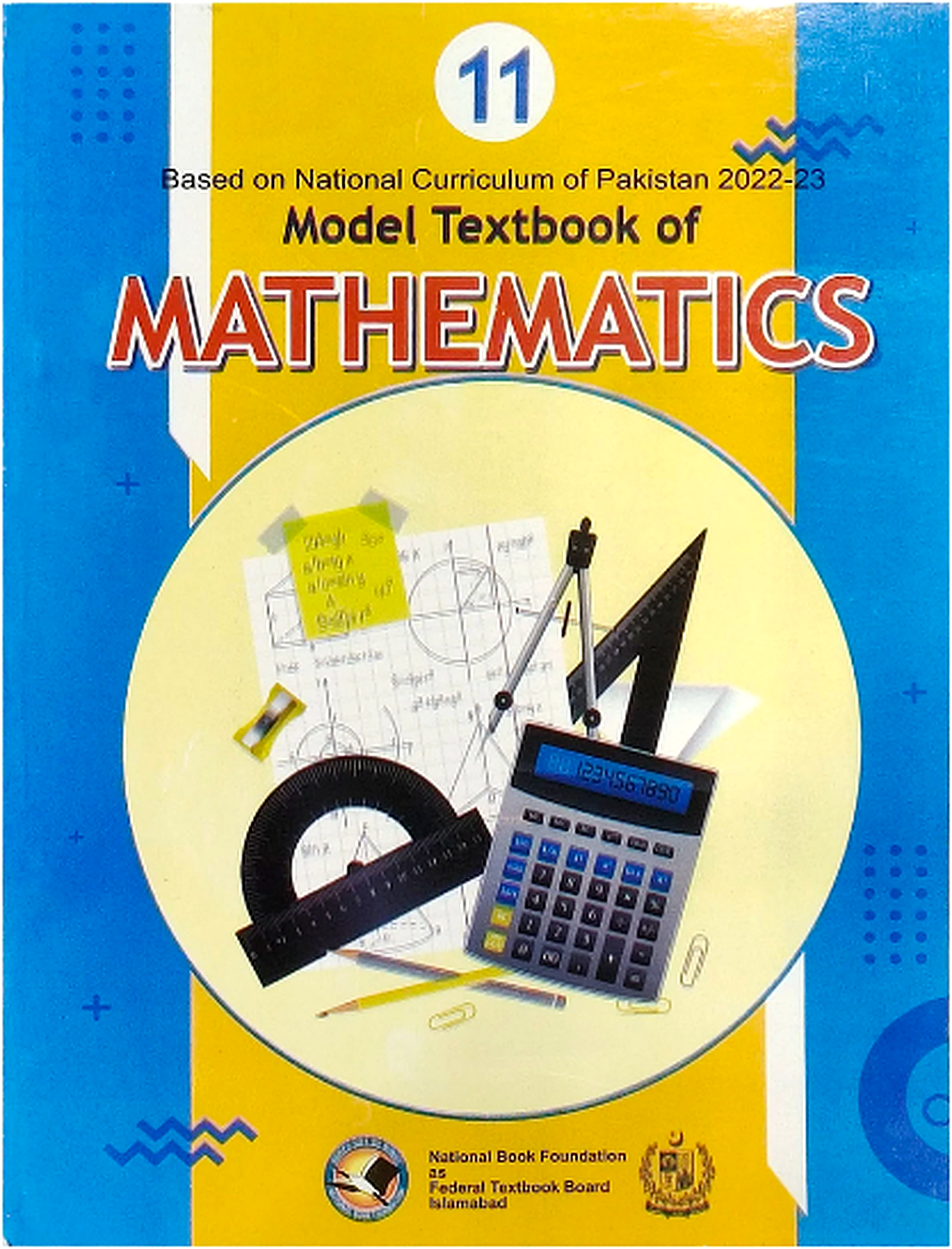
Master Class 11 Mathematics Unit 2: Matrices and Determinants with easy, solved, and step-by-step notes from HSA Notes. These notes are prepared for students following the FBISE NBF New Book and New Course for Session 2026–27 and cover all six exercises and the Review Exercise with detailed mathematical working.
🎓 Online Classes with Experienced Experts
Class 11 Math Unit 2 Matrices and Determinants
The FBISE NBF New Book Class 11 Mathematics Unit 2 develops students’ understanding of matrices and their applications. A matrix organizes numbers or mathematical expressions into rows and columns, making it possible to represent and manipulate mathematical information efficiently.
The complete HSA Notes material covers Exercises 2.1, 2.2, 2.3, 2.4, 2.5, 2.6, and the Review Exercise.
What Is Covered in These Notes?
HSA Notes provides comprehensive preparation material for Unit 2, including:
- All 6 textbook exercises
- Complete Review Exercise
- Matrix order and notation
- Types of matrices
- Special matrices
- Matrix addition and subtraction
- Matrix multiplication
- Transpose of a matrix
- Scalar multiplication
- Determinants
- Singular and non-singular matrices
- Inverse of a matrix
- Adjoint of a matrix
- Row and column operations
- Row echelon form
- Gauss-Jordan method
- Systems of simultaneous equations
- Cramer’s Rule
- Homogeneous systems
- Important MCQs
- Short questions
- Long questions
- Numerical problems
- Formula-based solutions
Exercise 2.1 Matrices and Their Types
Exercise 2.1 introduces the basic structure and classification of matrices. Students learn how to identify the order of a matrix and recognize different types based on their dimensions and entries.
Matrix Order
The order of a matrix is determined by the number of rows and columns. Selected questions include orders such as:
- 2 × 3
- 3 × 2
- 3 × 1
- 1 × 4
- 1 × 1
- 2 × 2
Understanding matrix order is essential because it determines whether particular matrix operations, especially multiplication, are possible.
Types of Matrices
Students learn to identify matrices as rectangular, square, row, and column matrices. The exercise also introduces special matrices and their characteristics.
Special Matrices
Important special matrices include:
- Lower triangular matrix
- Scalar matrix
- Diagonal matrix
- Identity matrix
The exercise also includes questions involving symmetric and skew-symmetric matrices. Students learn how to distinguish between these forms by comparing the entries with their transposes.
Exercise 2.2 Operations on Matrices
Exercise 2.2 focuses on important matrix operations. Students practice addition, multiplication, transpose, and scalar multiplication.
For example, matrix addition may produce a result such as:
A + B = [4 5; 2 8]
Matrix multiplication requires careful checking of the dimensions of the matrices before performing the multiplication. The notes explain the appropriate multiplication procedure with complete working.
The transpose of a matrix is also covered. For example:
Aᵀ = [3 2; 6 2; 1 9]
Students also practice scalar multiplication, such as:
2A = [6 12; 4 4; 2 18]
These operations form the foundation for the later topics in the unit.
Exercise 2.3 Determinants and Inverse Matrices
Exercise 2.3 introduces determinants and their role in matrix calculations. Students learn how to calculate determinants and use them to determine important properties of matrices.
For a two-by-two matrix, the determinant can be calculated using the appropriate formula. One selected example gives:
det A = 3 × 6 − 2 × 2 = 14
Students also learn about singular matrices, where the determinant is zero. A matrix with a non-zero determinant is non-singular and can have an inverse under the required conditions.
The exercise also introduces the inverse matrix and its relationship with the determinant and adjoint:
A⁻¹ = (1/det A) adj A
Exercise 2.4 Properties of Determinants
Exercise 2.4 develops students’ understanding of determinant properties. These properties can make lengthy calculations easier and provide useful methods for solving examination questions.
An important property covered in the notes is:
det(AB) = det(A) × det(B)
Students also practice properties involving scalar multiplication, including expressions of the form:
det(kA) = kⁿ det(A)
The notes explain the conditions and applications of these properties through solved questions.
Exercise 2.5 Row Operations and Echelon Form
Exercise 2.5 focuses on elementary row and column operations and the reduction of matrices into useful forms.
Students learn about row echelon form and how a matrix can be reduced toward an upper-triangular structure through appropriate operations.
The exercise also introduces the Gauss-Jordan method, which can be used for solving systems of linear equations and other matrix problems.
The HSA Notes solutions show the mathematical working clearly so students can understand how each row operation changes the matrix.
Exercise 2.6 Systems of Equations and Cramer’s Rule
Exercise 2.6 applies matrices and determinants to systems of simultaneous equations. Students learn methods for representing equations in matrix form and solving them using determinants.
One important method is Cramer’s Rule, where variables can be determined using determinants. A common form is:
x = det(Dₓ) / det(A)
Students also study homogeneous systems and conditions related to trivial and non-trivial solutions.
These topics connect the concepts of determinants and matrices with practical algebraic problem-solving.
Review Exercise
The Review Exercise provides an opportunity to revise the major concepts from all six exercises.
Important areas include:
- Matrix order identification
- Types of matrices
- Matrix operations
- Determinant properties
- Inverse matrices
- Conditions for singular matrices
- Systems of equations
- Cramer’s Rule
- Consistency of systems
- Important MCQs
Students should attempt the Review Exercise independently after completing Exercises 2.1–2.6.
FBISE Exam-Focused Preparation
HSA Notes helps students practice:
MCQs: Quick identification of concepts, matrix properties, determinant conditions, and formulas.
Short Questions: Definitions, properties, formulas, and direct applications.
Numerical Questions: Detailed calculations with appropriate formulas and mathematical working.
Long Questions: Complete solutions involving matrix operations, determinants, inverse matrices, row operations, and systems of equations.
Students should first attempt questions themselves and then use the solved notes to check their working.
Why Use HSA Notes?
HSA Notes is designed to make the FBISE NBF New Book easier to understand and revise. Instead of providing only final answers, the notes focus on the methods used to reach those answers.
They can be useful for:
- Understanding difficult matrix concepts
- Practicing all six exercises
- Revising determinant formulas
- Learning matrix operations
- Preparing for MCQs
- Checking numerical solutions
- Revising before examinations
- Practicing long questions
The notes can support students at different preparation levels, including those who need basic concept revision as well as students looking for additional examination practice.
Join Online Classes
Students who need additional assistance with Class 11 Mathematics:
Email: hsanotes48@gmail.com
Frequently Asked Questions
How many exercises are included in Unit 2?
Unit 2 contains six exercises, from Exercise 2.1 to Exercise 2.6, followed by the Review Exercise.
What is Unit 2 of Class 11 Mathematics?
Unit 2 is Matrices and Determinants. It covers matrix types, operations, determinants, inverse matrices, row and column operations, systems of equations, and Cramer’s Rule.
Are these notes for the FBISE NBF New Book?
Yes. These notes are prepared for students following the FBISE NBF New Book and New Course for Session 2026–27.
Are all six exercises solved?
Yes. HSA Notes covers Exercises 2.1, 2.2, 2.3, 2.4, 2.5, and 2.6, along with the Review Exercise.
Are these notes useful for FBISE exam preparation?
Yes. They provide supplementary practice for MCQs, short questions, numerical problems, long questions, formulas, and textbook exercises.
Conclusion
Class 11 Mathematics Unit 2: Matrices and Determinants develops important algebraic skills that students can use throughout their mathematics studies. From matrix order and special matrices to determinants, inverse matrices, row operations, systems of equations, and Cramer’s Rule, the unit contains several concepts that require accurate practice.