
Introduction
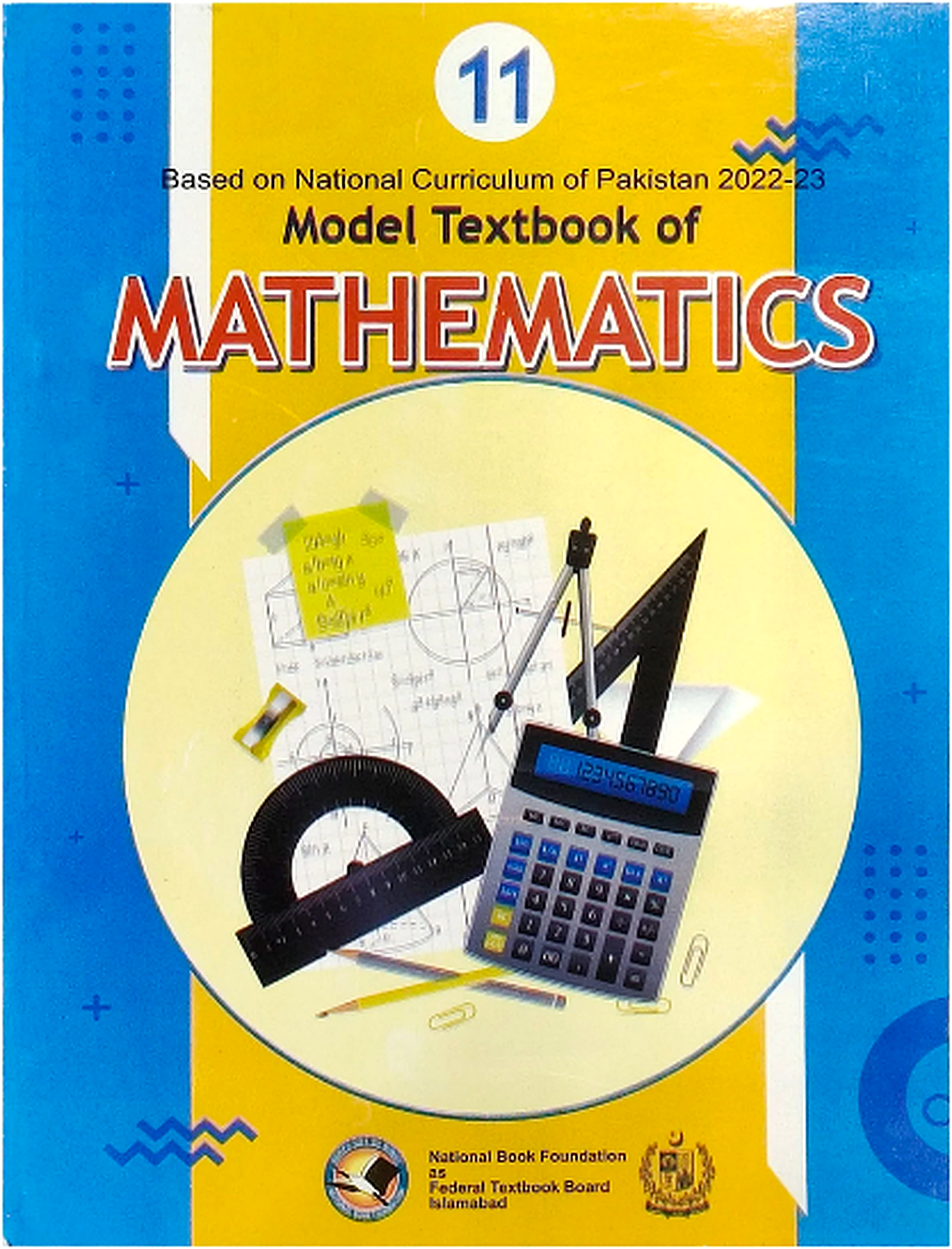
Prepare Class 11 Mathematics Unit 7: Mathematical Induction and Binomial Theorem with complete solved exercises from HSA Notes. These notes are designed according to the FBISE NBF New Book and New Course for Session 2026–27 and cover Exercises 7.1, 7.2, 7.3, 7.4, and the Review Exercise.
🎓 Online Classes with Experienced Experts
This unit combines two important areas of mathematics. Mathematical Induction provides a systematic method for proving statements for all positive integers, while the Binomial Theorem provides methods for expanding powers of binomial expressions, finding general terms and coefficients, and making useful approximations.
HSA Notes presents the questions in an exam-focused format with mathematical working, formulas, proofs, expansions, and selected key answers to support Class 11 FBISE preparation.
HSA Notes Features
- Complete solved Exercises 7.1–7.4
- Review Exercise preparation
- Mathematical induction proofs
- Series summation formulas
- Partial fractions and telescoping methods
- Binomial expansions
- General terms and coefficients
- Middle and independent terms
- Binomial approximations
- Exam-focused numerical questions
- Important MCQs
- PDF with diagrams and tables
- Easy revision format
Unit 7: Mathematical Induction and Binomial Theorem
Mathematical Induction is a proof technique used to establish that a mathematical statement is true for every positive integer. The usual method involves proving the initial case and then showing that if the statement is true for one positive integer, it is also true for the next.
The Binomial Theorem is used to expand expressions of the form (a+b)n(a+b)^n. It also helps students determine individual terms, coefficients, middle terms, and approximations.
Exercise 7.1 – Mathematical Induction
Exercise 7.1 focuses on proving identities and summation formulas using mathematical induction. Students practice establishing the base case and then proving the inductive step.
Important results include:
Q1
1 + 2 + … + n = n(n+1)/2
Q2
1² + 2² + … + n² = n(n+1)(2n+1)/6
Q3
1³ + 2³ + … + n³ = [n(n+1)/2]²
Students also prove identities involving fractions and sequences.
Q4
∑ 1/((3k−2)(3k+1)) = n/(3n+1)
Q5
1² + 3² + … + (2n−1)² = n(4n²−1)/3
Q6
4³ + 4⁴ + … + 4ⁿ = (64/3)(4^(n−2)−1)
Further important identities include:
Q7
∑ 1/(k(k+1)) = n/(n+1)
Q8
∑ (k+2)/(k(k+1)2^k) = 1 − 1/((n+1)2^n)
Q9
∑ (k+4)/(k(k+1)(k+2)) = n(3n+7)/(2(n+1)(n+2))
Q10
7 + 77 + … + (n sevens) = 7/81 (10^(n+1) − 9n − 10)
Q11
1³ + 3³ + … + (2n+1)³ = (n+1)²(2n²+4n+1)
These problems strengthen students’ ability to use induction for algebraic identities and summation formulas.
Exercise 7.2 – Binomial Theorem
Exercise 7.2 introduces binomial expansion and develops skills for finding general terms, middle terms, coefficients, and terms independent of a variable.
One important expansion is:
Q1
(2√x + 1/√x)^5 = 32x^(5/2) + 80x^(3/2) + 80x^(1/2) + 40x^(−1/2) + 10x^(−3/2) + x^(−5/2)
Students also practice expansions such as:
Q2
(3 + y/3)^9 expansion up to y³
For the general term:
Q3
In (x − 1/x)^10, the general term is
C(10,k)x^(10−k)(−1/x)^k
For middle terms:
Q4
Middle term in (a − 3/x²)^12: C(12,6)a⁶(−3/x²)^6
Students also learn how to identify a term independent of x.
Q5
Term independent of x in (x² + 1/x)^9: k = 3, C(9,3)
Another question involves ratios of coefficients:
Q6
Ratio of coefficients: three consecutive terms ratio 6:33:110 → n = 15, p/q = 11/4
Exercise 7.3 – Binomial Approximations
Exercise 7.3 applies binomial expansions to approximate numerical values and algebraic expressions.
Important results include:
Q1
(1 + x/3)^(1/3) ≈ 1 + x/9 − x²/81 + 5x³/2187, |x| < 3
Q2
(1 − x/2)^(−1/2) ≈ 1 + x/4 + 3x²/32 + 5x³/128
Q3
Approx. (1.03)^(1/3) ≈ 1.0099
Students also determine coefficients in combined expressions.
Q4
Coefficient of x in (1 + 3x/2)^(1/3) + (1 − x/4)^(−1/2) = −95/24
Q5
(2 + x)^(1/2)(3 − x)^(−1/3) up to x²: constant √2 × 3^(−1/3), etc.
Q6
Series for y = ∑ 3/(2^(2k)k!)
These questions demonstrate how binomial expansions can be used to obtain approximate values and power series.
Exercise 7.4 – Applications
Exercise 7.4 contains applications involving powers, remainders, fractional parts, and numerical patterns.
Selected answers include:
Q1 Unit digit of 27^304: 3 (cycle 4)
Q2 9^205 mod 31: 9^30 ≡ 1, remainder 4
Q3 Fractional part of √26 + √10: between 6–7
Q4 Last two digits of 15^8: 25
Q5 10^250 + 9^850 − 10^250 + 9^850: even
These questions require careful observation of powers, cycles, modular relationships, and numerical properties.
Review Exercise 7
The Review Exercise 7 combines the main concepts from Mathematical Induction and Binomial Theorem. Important review areas include induction proofs, binomial coefficients, middle terms, general terms, and approximations.
Selected review keys include:
(i) Induction for all n
(iv) Middle term of (a+b)^20: T₁₁
(vii) p in (1+x)^p, T₃ coefficient −15/2: p = −5
Q1
Prove ∑ k/(k+1)! = 1 − 1/(n+1)!
Q3
Consecutive terms ratio 6:33:110, find n = 15
Q5
Approx. (3β/(5α−2β))^(−1/3) ≈ α/β
FBISE Exam Preparation
For the FBISE Class 11 Mathematics examination, students should practice both proof-based and numerical questions from this unit. Mathematical Induction requires a clear understanding of the base case and inductive step, while Binomial Theorem questions require accurate use of coefficients and powers.
Special attention should be given to induction proofs, summation identities, general terms, middle terms, coefficients, independent terms, expansions, approximations, and application-based questions.
View the Complete PDF
The complete Class 11 Maths Unit 7 solved PDF includes detailed mathematical working, proofs, expansions, tables, and exercise solutions for Exercises 7.1, 7.2, 7.3, 7.4, and the Review Exercise.
Who Can Use These Notes?
These notes are useful for FBISE Class 11 Mathematics students and learners preparing for examinations through relevant boards. They can support students studying in institutions such as Aitchison College, Beaconhouse, LGS, Roots Ivy, KIPS, Garrison, OPF, IMCB, and F.G. Colleges.
Students can use the material for classroom revision, homework, independent study, and examination practice.
Join Online Classes
Students who need additional support with Mathematical Induction or Binomial Theorem can use HSA Notes for exercise practice, revision, and concept preparation.
Email: hsanotes48@gmail.com
Conclusion
Class 11 Mathematics Unit 7: Mathematical Induction and Binomial Theorem develops important proof, algebraic, and approximation skills. Mathematical Induction helps students prove identities systematically, while the Binomial Theorem provides powerful techniques for expansion, coefficients, general terms, middle terms, and approximations.
HSA Notes provides complete solved Unit 7 notes for the FBISE NBF New Book, Session 2026–27, covering Exercises 7.1–7.4 and the Review Exercise. Use these notes with the textbook to revise formulas, practice proofs, understand binomial expansions, and strengthen preparation for the Class 11 Mathematics examination.