
Introduction
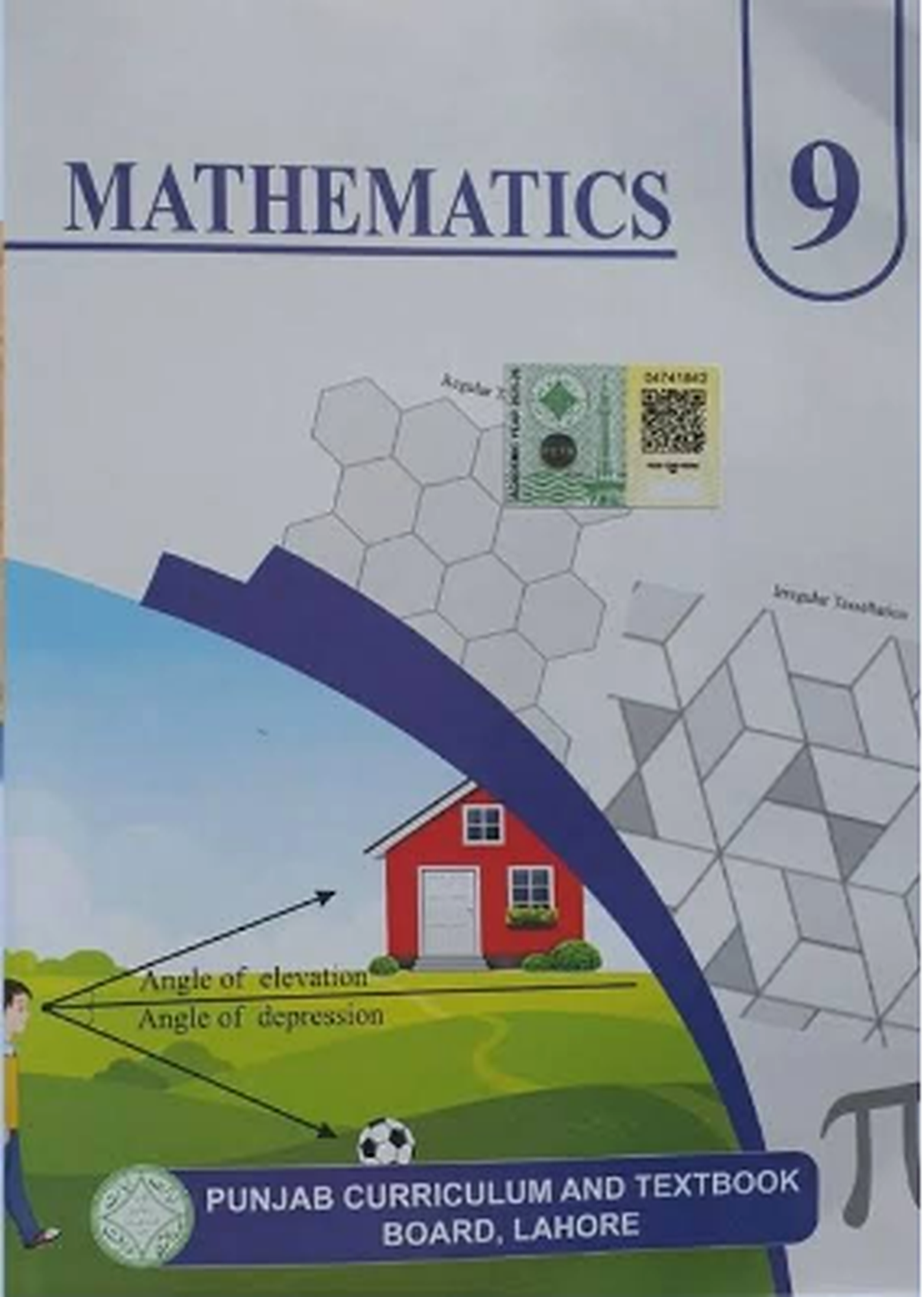
HSA Notes brings short, clear, exam focused notes designed to help Class 9 SSC Part One Matric students score 90 plus marks in Punjab Board exams under the New Book 2026 to 2027 session.
🎓 Online Classes with Experienced Experts
This page covers Unit 11, Loci and Construction, from Exercise 11.1, including constructing triangles from given measurements and verifying the concurrency of perpendicular bisectors, medians, angle bisectors, and altitudes.
Official Youtube Channel : www.youtube.com/@PECTAAlearnersclub
HSA Notes Features
- Short, easy to remember definitions.
- Step by step solutions for every question.
- Tricks and memory aids for faster revision.
- Exact alignment with the PCTB and PECTAA textbook.
- Constructions simplified into a clear, repeatable method.
- Past paper pattern questions included throughout.
- A fast revision format built for last minute review.
- Trusted by Punjab students.
Available Across All Punjab Boards and Top Schools
These notes are built for students across all Punjab Boards, including Lahore, Gujranwala, Rawalpindi, Faisalabad, Bahawalpur, Multan, Sargodha, Sahiwal, and DG Khan, and are used at top schools including The City School, Beaconhouse, Roots International, Lahore Grammar School, Karachi Grammar School, Froebel’s, The Educators, Army Public School, Divisional Public School, and Government Model School.
Exercise 11.1, Constructions and Verifications
| No. | Construction Task | Given Measurements |
|---|---|---|
| 1(i) | Construct triangle ABC and verify its perpendicular bisectors are concurrent | AB = 5 cm, BC = 6 cm, AC = 7 cm |
| 1(ii) | Construct triangle ABC and verify its perpendicular bisectors are concurrent | AB = 7.1 cm, angle B = 135°, BC = 6.5 cm |
| 2(i) | Construct triangle LMN and verify its medians are concurrent | LM = 4.9 cm, angle L = 51°, angle M = 38° |
| 2(ii) | Construct triangle LMN and verify its medians are concurrent | MN = 4.8 cm, angle N = 30°, LM = 8.1 cm |
| 3(i) | Verify the angle bisectors of the triangle are concurrent | AB = 4.5 cm, angle A = 45°, AC = 5.3 cm |
| 3(ii) | Verify the angle bisectors of the triangle are concurrent | AB = 6 cm, angle A = 150°, angle B = 60° |
| 4 | Construct triangle DEF, draw its altitudes, and locate the orthocentre | DE = 4.8 cm, EF = 4 cm, angle E = 45° |
| 5(i) | Construct triangle BCD and check for the ambiguous case | BC = 5 cm, angle B = 62°, CD = 4.7 cm |
| 5(ii) | Construct triangle KLM and check for the ambiguous case | LM = 6 cm, angle M = 42°, LK = 5 cm |
How to Construct a Triangle and Verify Concurrency
Every construction in this exercise starts the same way: use a ruler to draw one given side to the exact length, then use a protractor or compass to lay off the given angle or the second given side from an endpoint of that first side, and finally join the remaining vertices to complete the triangle.
Once the triangle is drawn, the type of concurrency being verified decides the next steps. For perpendicular bisectors, construct the perpendicular bisector of each side using a compass, by drawing arcs from both endpoints of the side with the same radius and joining the two arc intersections; if the construction is accurate, all three perpendicular bisectors will cross at a single point, called the circumcentre.
For medians, first find the midpoint of each side using the same arc method, then join each midpoint to the opposite vertex; the three medians should meet at a single point, called the centroid. For angle bisectors, bisect each angle of the triangle using equal arcs from the vertex and from the two rays forming the angle; the three angle bisectors should meet at a single point, called the incentre.
How to Find the Orthocentre and Handle the Ambiguous Case
To find the orthocentre of triangle DEF, draw the altitude from each vertex, which is the line through that vertex meeting the opposite side at a right angle, using a set square or compass construction to ensure true perpendicularity.
All three altitudes should intersect at one point, the orthocentre, though for a triangle with an obtuse angle this point may fall outside the triangle rather than inside it. The ambiguous case, tested in question 5, arises when a construction is given two sides and an angle that is not the included angle between them, since this information can sometimes be satisfied by two different, non-congruent triangles rather than just one.
To check for the ambiguous case, construct the triangle as specified and see whether the arc used to fix the final vertex crosses the working line at one point, at two points, or not at all: two crossing points confirm the ambiguous case, since either intersection completes a valid triangle satisfying the same given measurements.
Why This Unit Matters for Your Overall Score
Loci and construction questions test accuracy and method as much as understanding, since marks are awarded for correct compass and ruler technique in addition to the final figure, making careful, deliberate construction habits worth building well before the exam.
The four points of concurrency covered here, the circumcentre, centroid, incentre, and orthocentre, also reappear in later geometry topics and in coordinate geometry, so a confident grasp of how each is constructed and what it represents pays off beyond this unit alone.
Join Online Classes
Join online classes to aim for 90 plus marks, including past paper practice.
Contact: hsanotes48@gmail.com
Frequently Asked Questions
What point is formed where the perpendicular bisectors of a triangle meet? The circumcentre, which is equidistant from all three vertices of the triangle.
What point is formed where the medians of a triangle meet? The centroid, the triangle’s balance point, which divides each median in a 2:1 ratio from the vertex.
What point is formed where the angle bisectors of a triangle meet? The incentre, which is equidistant from all three sides of the triangle.
What is the ambiguous case in triangle construction? It occurs when two sides and a non-included angle are given, and the construction can be completed in two different valid ways, producing two non-congruent triangles from the same data.
Are these notes aligned with the PCTB and PECTAA textbook? Yes, these notes are built to exactly match the PCTB and PECTAA New Book for Class 9 Mathematics for the 2026 to 2027 session.
Conclusion
With Exercise 11.1 fully covered, including triangle constructions and the verification of perpendicular bisectors, medians, angle bisectors, and altitudes, Class 9 students have a strong foundation for Unit 11, Loci and Construction. Use these notes alongside regular practice with past papers to build the confidence needed for 90 plus marks in your Punjab Board exam.
Best of luck for your Class 9 Mathematics exam!